1. Prepare the tea that will receive the scent
Jasmine tea begins with tea, often a finished green tea in the Fuzhou tradition. The base leaf has already been picked and processed before it meets the fresh flowers. Its own character still matters: a coarse or harsh base cannot become delicate simply because the floral scent is strong. Buds, young leaves and more mature leaves can produce different textures in the cup, so the choice of tea is one of the maker's first important decisions.
The tea and flowers need not be harvested on the same day. A spring tea can be prepared ahead of the summer jasmine season, then brought into the scenting process when suitable flowers are available. That gap helps explain why making jasmine tea is more than adding flowers to freshly picked leaves. It is a second stage of tea making, planned around the condition of both ingredients.
- Prepare the leafTea base ready first
- Pick budsBefore they open
- Open and sortSelect ready flowers
- Scent togetherFlowers meet tea
- Separate and dryRemove spent flowers
- Repeat if neededFurther scenting rounds
The number of scenting rounds depends on the tea and the maker.
2. Pick jasmine buds before they open
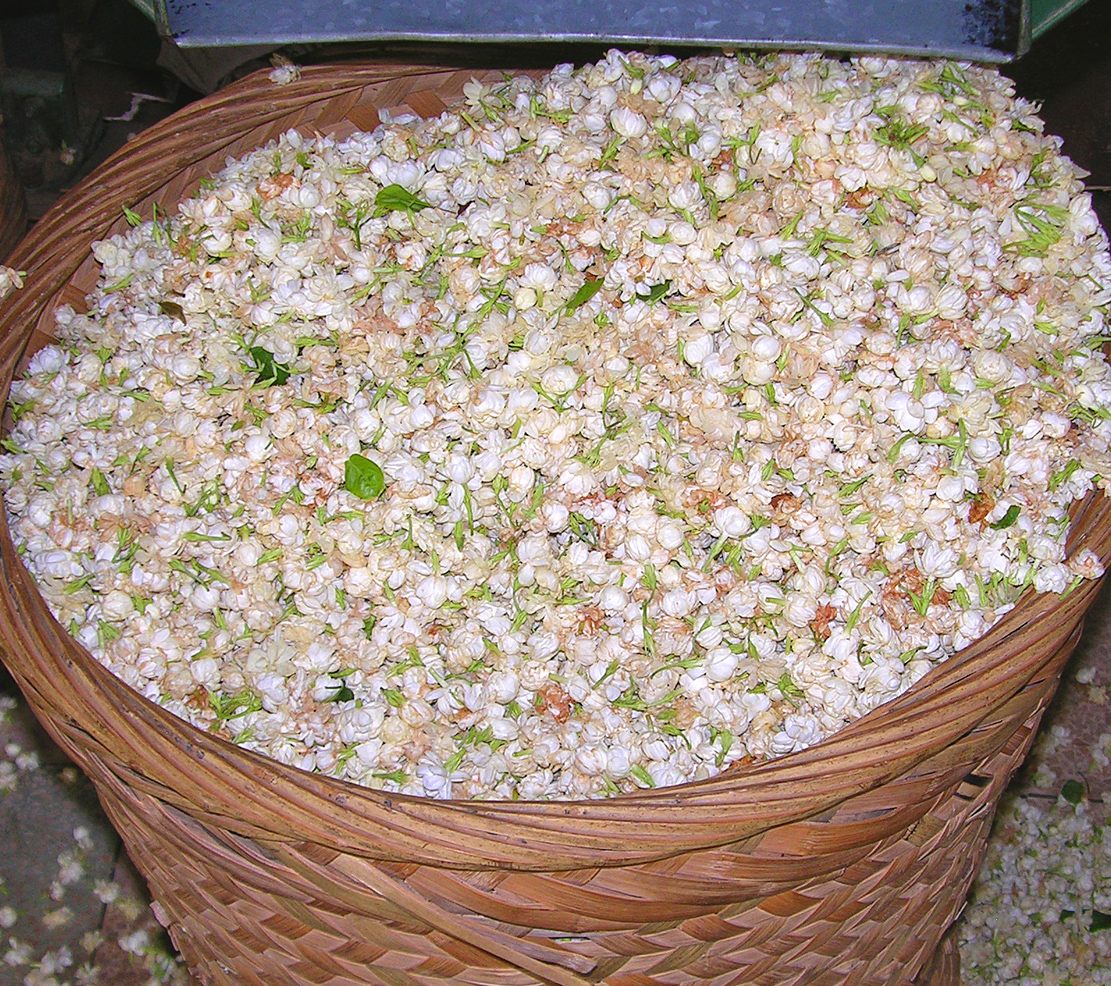
The work begins in the flower fields: pickers look for unopened buds during the hot part of the day. A Fuzhou agriculture bureau account describes afternoon picking of buds that have not yet opened. The point is to bring flowers to the tea maker with much of their fragrance still to be released. A flower that has already spent its most fragrant hours in the field offers a different starting material.
There is no useful universal clock time for every garden. Weather, season and the stage of the buds determine what can be picked. A good batch of tea depends on good flowers, so rain or poorly timed opening can change the maker's plan. This is one reason jasmine scenting follows a living crop rather than a fixed factory schedule.
3. Let the buds open, then sort the flowers
After picking, the buds are cared for as they open. They may rest for several hours before workers shake out buds that remain closed. Fuzhou descriptions identify flower nurturing as a distinct step before scenting. Temperature, air and the condition of the flowers affect the release of aroma, so workers watch the flowers rather than relying only on a timer.
Sorting separates flowers ready to scent the tea from material that has not opened as expected. That is painstaking work, but it gives the maker a more even batch to mix with the leaves. The visual distinction is simple enough for a reader to picture: closed buds are selected in the field, then the useful flowers are those opening at the right moment for scenting. Picking unopened buds and scenting with opening flowers are parts of the same plan, not contradictory instructions.
4. Bring the fresh flowers and tea together
The prepared tea is mixed or layered with fresh jasmine flowers. Workers may turn and toss the leaves and flowers by hand to distribute them evenly before leaving them together overnight. Producer accounts describe stacking, flipping and mixing during a scenting round. The exact equipment and arrangement vary, but the aim is the same: give the leaf sustained contact with flowers that are actively releasing fragrance.
The flower releases aromatic compounds into the surrounding air, and the tea takes up some of that fragrance. The maker also manages heat and moisture while the two ingredients are together, since a warm, damp pile cannot simply be ignored until morning. Turning and airing the mixture, and judging when the flowers have done their work, help keep scenting under control. The craft lies in managing both living flowers and prepared tea, rather than simply soaking one ingredient in another.
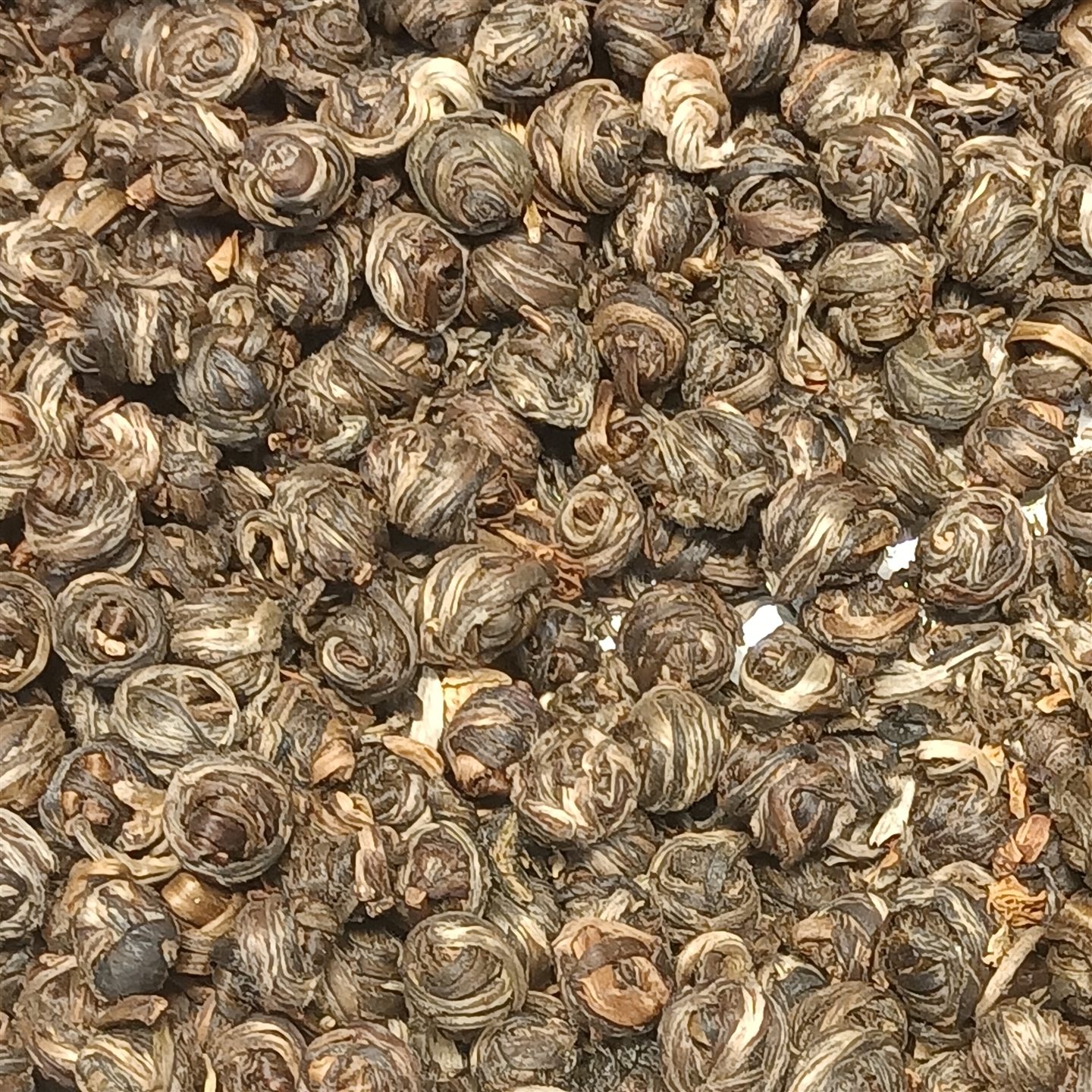
This scenting stage explains why a finished jasmine tea can smell vividly floral without containing visible petals. The flowers do their work during production. Seeing a flower in the dry tea is not proof of a stronger scent, and an absence of flowers does not mean the tea was made with added flavouring. For a particular packet, the producer's account of the method is more useful than the appearance alone.
5. Remove the spent flowers and finish the tea
After a scenting round, workers separate the used flowers from the tea. This can happen the next day, followed by gentle drying. Separating the flowers leaves the scented tea as the principal ingredient; drying helps manage the moisture gained during contact with fresh flowers so the leaf can be handled and stored. Cooling and sorting may follow before the tea is packed or scented again.
A charcoal stove is one traditional example of drying equipment, but not a rule for every jasmine tea. Baking or other carefully controlled drying can be used, and producers make choices according to their equipment and desired finish. Drying may change the balance of aroma, which is why makers judge the tea again before deciding whether another flower round is worthwhile.
6. Repeat with fresh flowers when the tea needs it
A maker may bring the dried tea together with a new batch of jasmine flowers and repeat the separation and drying. Intensive examples may use many rounds and take weeks, but no single number or duration applies to every jasmine tea. A Fuzhou producer describes four rounds for one named tea; other makers describe different counts. The number alone does not tell you what the tea will taste like.
Each return to the flowers costs time and requires another suitable harvest, while the tea still has to be kept in good condition. That is why weather and the maker's judgement remain central throughout the process. The useful question for a specific tea is how the maker handled its base leaf and flowers, how many rounds that batch received, and what balance they sought between the green tea and the jasmine. Good jasmine tea lets you notice both.


