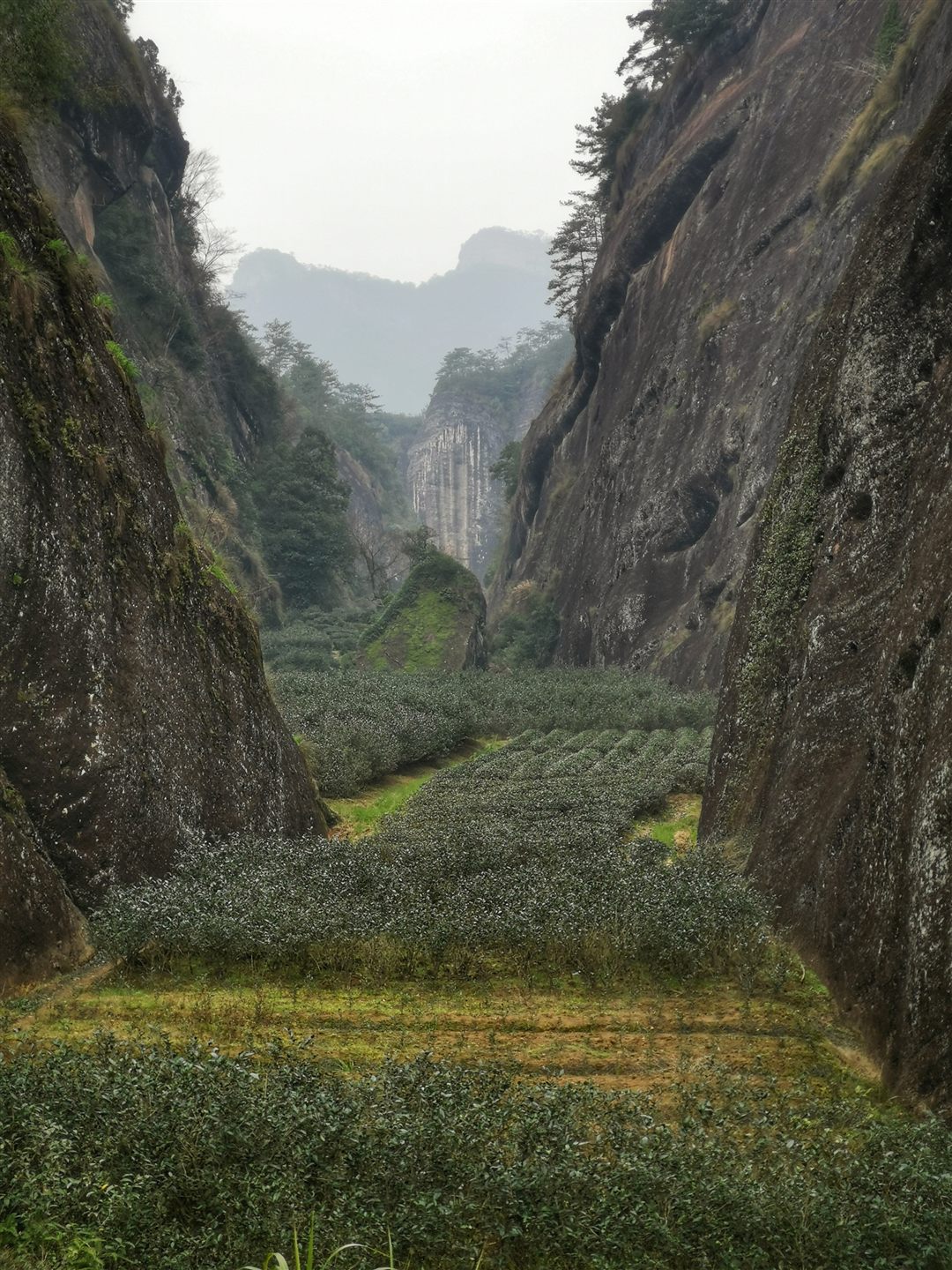
A regional association is a guide to further questions, not proof that a particular packet was grown or made there.
Wuyi: rock oolong
The Wuyi Mountains in northwestern Fujian are associated with Wuyi rock tea, a family of oolongs. ‘Rock tea’ describes a recognized regional tradition, not a promise that every leaf grows literally between rocks. Different cultivars and processing choices produce different teas within the family. Chinese geographical indication material identifies Wuyi rock tea with Wuyishan and its traditional processing.
When reading a label, look beyond a famous name such as Da Hong Pao. Ask whether the origin is specified, whether the tea is a blend, and how it was roasted. Those details tell you more about the cup in front of you than the broad word ‘Wuyi’ alone.
Anxi: Tieguanyin and other oolongs
Anxi County, farther south in Fujian, is closely linked with Tieguanyin. The name can refer to a tea plant variety and, in the protected regional context, to tea produced in Anxi. A Fujian agriculture department guide describes several finished styles, including lighter fragrant examples and teas with a fuller roast. One label therefore cannot tell you how dark or roasted an individual batch will be.
Anxi's tea landscape includes other tea varieties too. If you are comparing two Anxi oolongs, note the cultivar and finishing style instead of assuming all teas from the county share the same leaf character.
Fuding: white tea
Fuding lies in northeastern Fujian near the Zhejiang border and is strongly associated with white tea. Official Chinese agriculture material names Baihao Yinzhen, Bai Mudan, Gongmei and Shoumei among Fuding white tea types. The leaf grade and processing influence the appearance, so ‘white tea’ is not a single shape or flavour.
White tea is commonly withered and dried with less intervention than a typical oolong. That distinction helps explain why a white tea from Fuding and an oolong from Wuyi should not be grouped together merely because they share a province.
Fuzhou: jasmine scenting
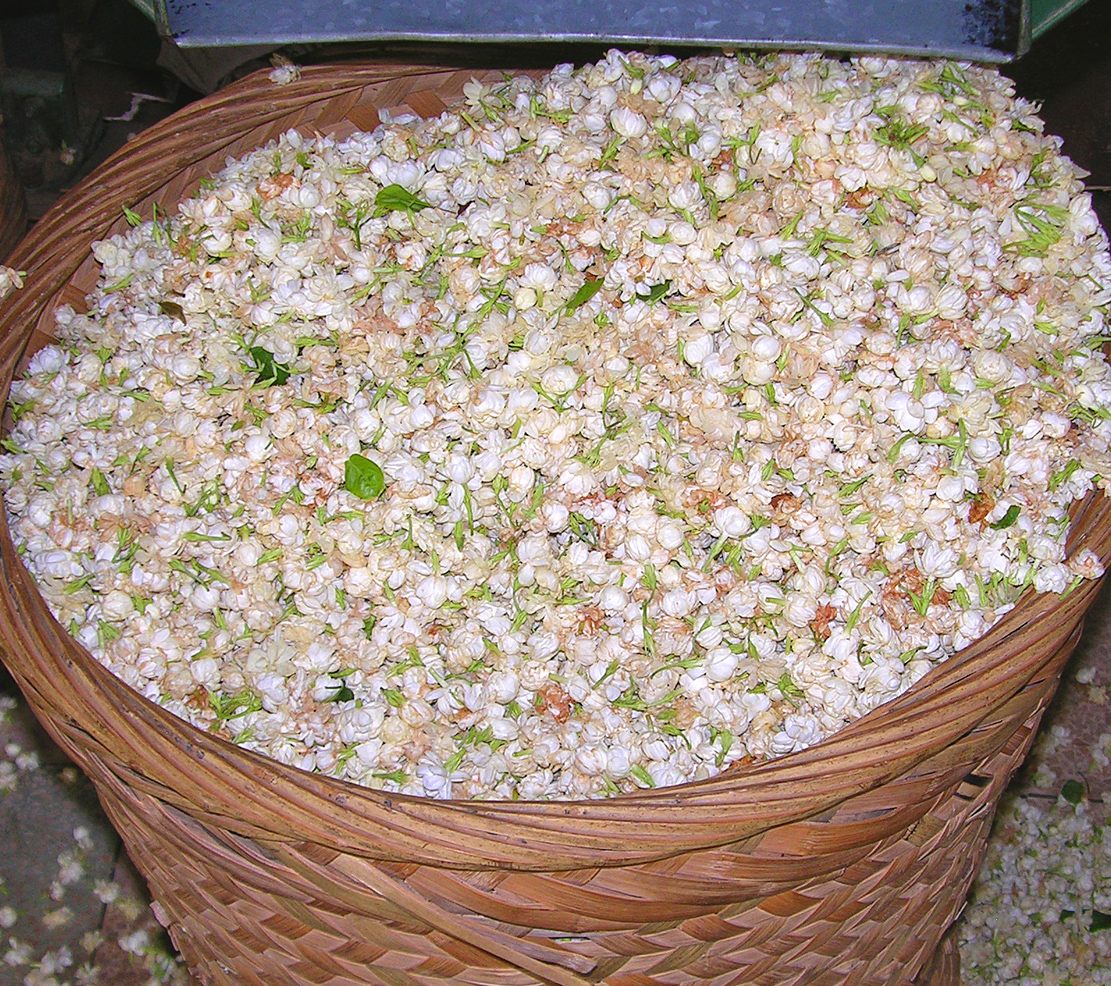
Fuzhou is associated with a long-established jasmine tea tradition. Fresh jasmine blossoms can be brought into contact with prepared tea so the leaves take up floral aroma; spent flowers are separated, and the process may be repeated. The Fujian provincial government identifies Fuzhou jasmine planting and tea culture as a recognized agricultural heritage system.
A tea described as Fuzhou jasmine tea is different from a plain unscented green tea, even if green tea forms its base. Jasmine pearls are one possible presentation of scented leaf; the place name and pearl shape answer different questions.
How to use this map
Use the four places as starting points for reading, not as a complete inventory of Fujian tea. On a packet, separate the province, specific locality, tea category and maker's processing description. If any is missing, leave it unknown. A regional name alone does not verify the exact farm, cultivar, harvest or quality of a tea.


