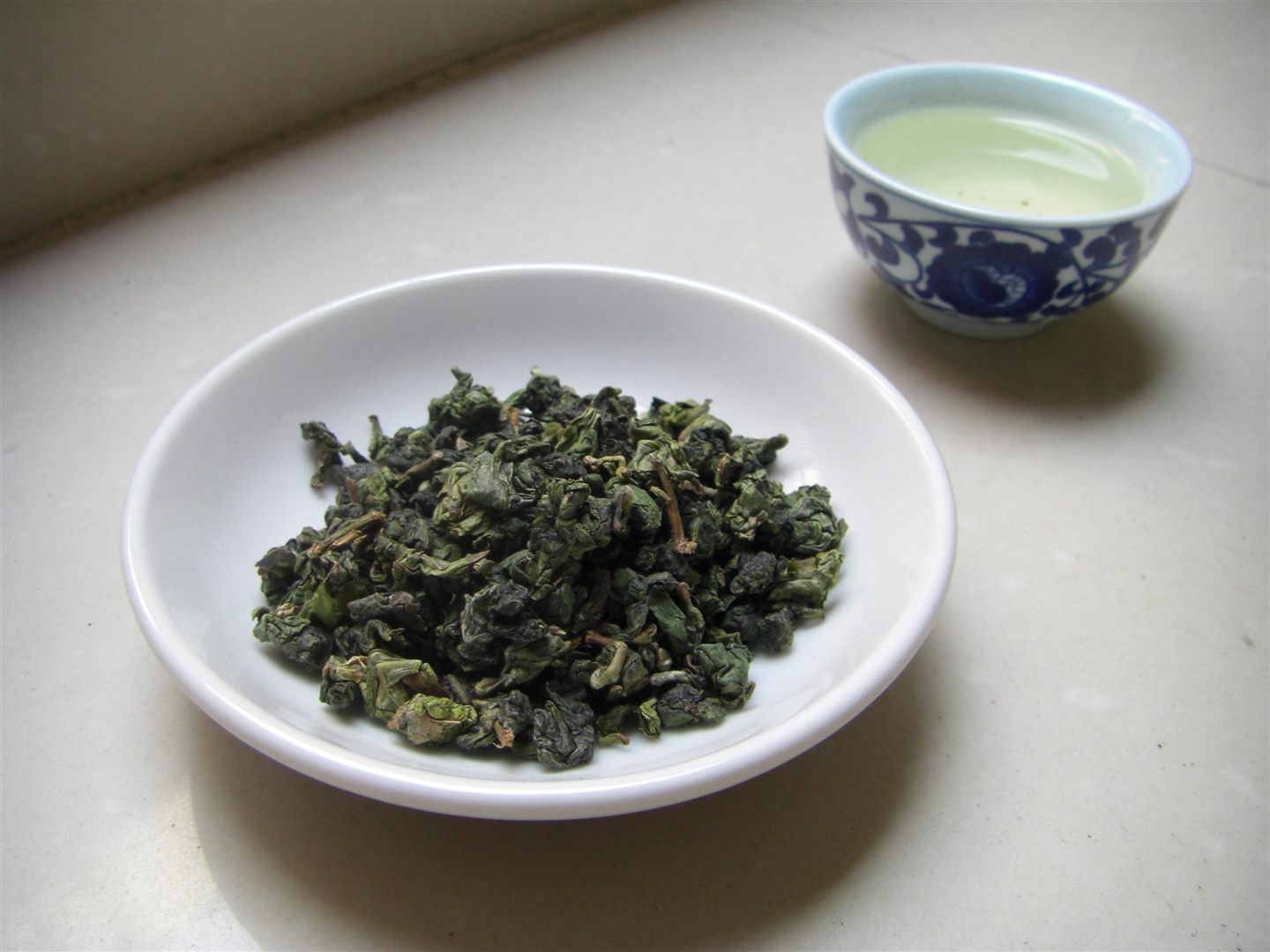
For a floral Tieguanyin, try 5 g in a 100–110 ml gaiwan with water around 90–95°C and a first 15–20 second infusion. For a roast-led one, try 95–100°C and taste after 10–15 seconds. These are cautious trials; follow the maker's recipe first.
Choose a floral or roast-led style first
Tieguanyin is a southern Fujian oolong name, not one fixed appearance or recipe. The two routes below are buying and brewing cues, not quality grades. Ask the seller which finish a packet represents, then follow that product's directions before changing time or temperature. Tea Guardian describes both bouquet and browned finishes, while individual producers vary their handling within each broad route.
Many current Anxi examples are tightly rolled, but shape alone does not settle the finish or authenticate an origin. Seven Cups also makes a traditional Tieguanyin with long, dark, twisted leaves. That is a particular producer's example, not a claim that all traditionally made Tieguanyin must look that way. Look for an explicit origin and finishing description as well as a photograph of the actual leaf.
| Question | Floral or lighter finish | Roast-led or browned finish |
|---|---|---|
| What to look for | A named fresh or bouquet style; often greener rolled leaf | A named baked or browned style; may be brown rolled or twisted leaf |
| Cup direction | Floral lift, with variable green or creamy notes | Baked, toasted or deeper notes; leaf character should remain |
| Cautious gaiwan start | 5 g in 100–110 ml; 90–95°C; 15–20 seconds | 5 g in 100–110 ml; 95–100°C; 10–15 seconds |
These are flexible trials, not standards. Appearance and aroma vary by lot; the producer's recipe comes first.
What the name identifies
Tieguanyin is strongly associated with Anxi and its surroundings in southern Fujian. It is an oolong name used in English as Iron Goddess of Mercy or Iron Buddha, with variant spellings such as Tie Guan Yin and Ti Kuan Yin. Ask whether a packet identifies Anxi, the maker and the finished style; those details tell you more about the tea being offered.
The name travels beyond its historic area, and sellers use it for products with different leaves and finishes. A cultivar claim, an origin claim and a flavour claim are separate things. Do not infer that a tea is old, rare or made by hand from the name alone. If provenance matters to you, look for a producer description rather than a romantic paragraph about the name's legend.
Floral, greener finishes
Many contemporary Tieguanyins are rolled into compact green-looking pellets and finished to emphasize a lifted floral aroma. When infused, the rolled leaves expand substantially, so a roomy gaiwan is useful. A good example can be fragrant without tasting like added perfume. The aroma comes from the worked tea leaf unless the listing explicitly says it is scented; do not confuse processing-derived floral notes with jasmine scenting.
These teas vary in oxidation and final baking, even within a shop's 'floral' range. Some taste creamy or sweet, some greener and brisker. Avoid assuming vivid green dry leaves prove quality. Read the seller's finishing notes and, if possible, look for a description of the brewed liquor and leaf. Keep fresh, lightly finished tea well sealed, dry and away from food odours; follow the maker's storage guidance.
Roasted and browned finishes
Traditional-style or roast-led Tieguanyin may receive more baking and appear brown rather than bright green. Roast can add warmth, depth and baked or woody notes, but the result depends on leaf and skill. A dark pellet is not proof of careful roasting, just as a pale one is not proof of freshness. Specialists describe a range of browning rather than one fixed 'old style'.
Some sellers use terms such as nong xiang or yun xiang for a more roast-forward profile. Check exactly how that particular maker uses the term. 'Aged Tieguanyin' introduces a further claim about storage and sometimes later re-roasting; ask for credible production and storage details rather than treating age as automatic improvement. For a first comparison, buy small amounts of a floral and a roasted version from sellers who explain their processing.
Read a listing as a set of testable details
Useful listing details include origin, harvest season if known, floral or roasted finish, approximate roast level, producer or farm identification, and a brewing recommendation tied to that product. None of these guarantees the cup will suit you, but together they let you form an expectation. Be wary of a listing that relies only on a grand English name and a claimed aroma without saying whether it is green-style or browned.
If choosing online, ask whether the photograph shows the actual style or is generic. Check how the seller stores a fresh floral version and whether a roasted one has been packed against moisture and odours. Keep notes on what you liked: floral lift, body, roast, or the way later infusions changed.
Brew it in a small vessel
A manageable first trial is 5 g in a 100–110 ml porcelain gaiwan. For a floral style, use water around 90–95°C and pour the first infusion after about 15–20 seconds. A roasted style may respond to 95–100°C; check it after 10–15 seconds. Pour fully into a cup or pitcher, taste when cool enough, then repeat with modest time additions. TeaVivre's own product recipes can use 7 g in 110–120 ml with shorter times, illustrating why the packet's directions deserve priority.
If the floral cup tastes sharp, shorten the next pour or lower the water temperature a little. If tightly rolled leaf gives a quiet first cup, allow the following pour a few extra seconds while it opens. If a roasted version tastes only of roast, try less leaf or a shorter infusion before concluding that the tea lacks other character. See the gongfu workflow for the full session.
Use a larger cup when it suits the day
You do not need a gaiwan to enjoy Tieguanyin. For a mug with a removable infuser, try about 3 g in 200–250 ml. Use water around 90°C for a floral style or closer to 95°C for a roasted style, and check after roughly two minutes. Remove the infuser when the cup tastes balanced. A large mug and a small gaiwan have different leaf-to-water ratios, so their times should not be swapped directly.
You may get another useful infusion by adding fresh water and extending the time. Stop when the leaf no longer makes a cup you enjoy. Keep the tea dry and sealed between uses, away from spices and the stove. A greener product may have more specific cold-storage advice from its maker.
Follow the making, then judge the cup
The production of Tieguanyin involves more than simply picking and drying leaves: withering, handling, oxidation, fixing, rolling and finishing choices all shape the result. Our photo essay on how Iron Buddha is made follows the making process. This guide focuses on what a buyer can identify in finished tea and how to prepare it.
When you taste, separate the dry-leaf smell, the liquor and the aftertaste. A pleasing floral aroma should have a cup you want to drink beneath it; a deep roast should leave some tea character beyond the first toasted impression. These are practical preferences, not a universal grading system. A named finish and repeatable brewing notes will help you find another tea in the direction you enjoyed.
Does Tieguanyin contain caffeine?
Yes. Tieguanyin is made from Camellia sinensis leaf and contains caffeine. A floral finish is not reliably a 'low caffeine' oolong, and roasting does not give a predictable cup amount. The quantity extracted varies with the actual leaf, how much you use, vessel volume, water and infusion time. A short gaiwan pour and a long mug infusion also make different servings, so a general comparison by roast colour would mislead.
For the wider explanation across tea families, read the caffeine note in the Chinese tea types guide.
Sources and further reading
- Tea Guardian, Tieguanyin origin and style range
- Tea Guardian, charcoal-style Tieguanyin
- TeaVivre, manually crafted Anxi Tieguanyin and gaiwan dose
- TeaVivre, roasted Anxi Tieguanyin brewing
- Seven Cups, traditional twisted-leaf Tieguanyin
- Astill et al., caffeine variation in tea infusions
- Ayakdaş and Ağagündüz, caffeine in six tea-type infusions

