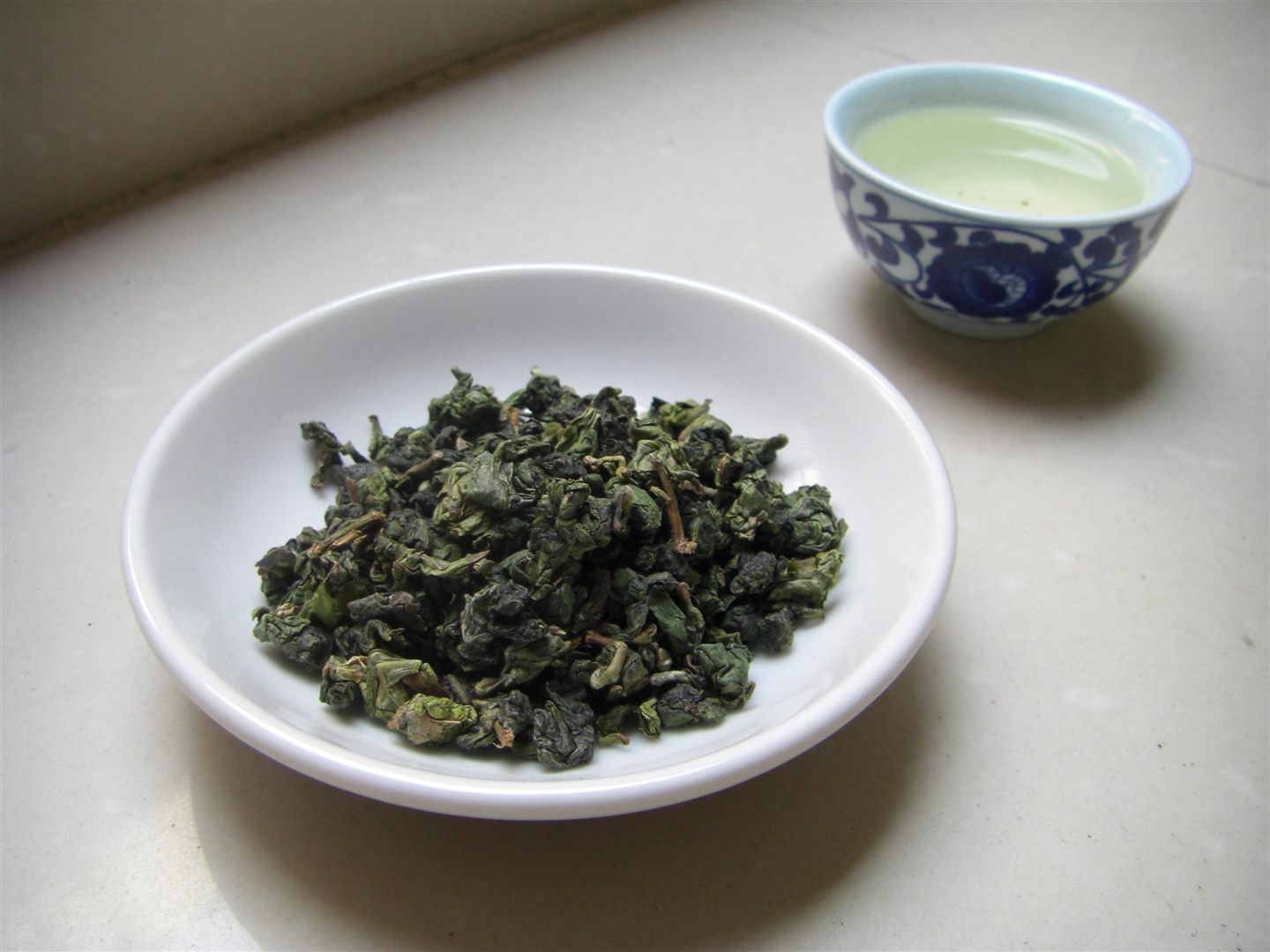
‘Partly fermented’ is common tea-trade language. For ordinary oolong production, ‘partly oxidized’ is the more precise description of what happens to the leaf.
What partial oxidation means
Once tea leaves are picked, their own enzymes can react with compounds in the leaf when cells are exposed to air. Makers manage that reaction through handling, rest and heat. Green tea is heated early to limit oxidation; black tea is allowed much more. Oolong sits between those approaches, but it is not a single fixed percentage halfway between green and black.
Washington State University describes oolong as partially oxidized and notes that heat is used when the desired level has been reached. Some descriptions call the reaction ‘fermentation,’ although the familiar oolong step is enzymatic oxidation rather than the microbial fermentation associated with certain other teas.
How makers guide the leaf
A typical sequence begins with withering, which reduces moisture and makes the leaf easier to work. Tossing or shaking can bruise the edges, encouraging oxidation in selected parts of the leaf. Resting between handling stages lets the changes continue. Heating then slows or stops oxidation, followed by shaping and drying. The order, intensity and equipment differ among regional traditions and producers.
The wet leaf can be informative. Some oolongs show greener centres and darker edges after brewing, a result associated with edge bruising. That pattern is a clue about handling, not a certification of origin or quality.
Why one oolong differs from another
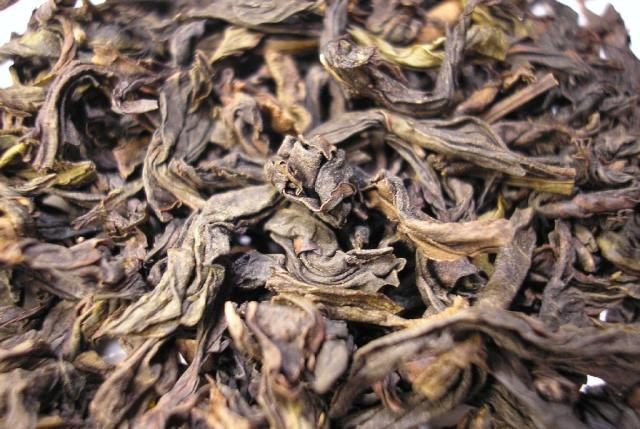
Oxidation is only one choice. Leaf variety, growing place, plucking standard, shape and final roast all affect the finished tea. Some oolongs are rolled into compact balls; others keep a twisted or strip-like shape. Roasting may be light or substantial, and a producer may change the finish from one batch to another.
Fujian offers a useful contrast: Anxi is closely associated with Tieguanyin, while Wuyi is associated with rock oolong. These are regional families rather than a complete map of oolong; oolong is also made beyond Fujian. A name on a packet can identify a style, a cultivar, a protected origin or a combination, so the accompanying description matters.
A practical way to explore
Start with two contrasting examples and compare them using the same vessel and water. Record the leaf shape, the aroma of the dry and wet leaf, and how the cup changes across infusions. If one is roasted and one is not, that difference may be more immediately obvious than a stated oxidation figure.
Use the maker's brewing guidance as a first attempt, then adjust one variable at a time. A bitter or heavy cup may improve with a shorter steep; a faint one may need more leaf or time. Avoid treating colour alone as a measure of oxidation, since roast, leaf quantity and infusion time also change the liquor.


