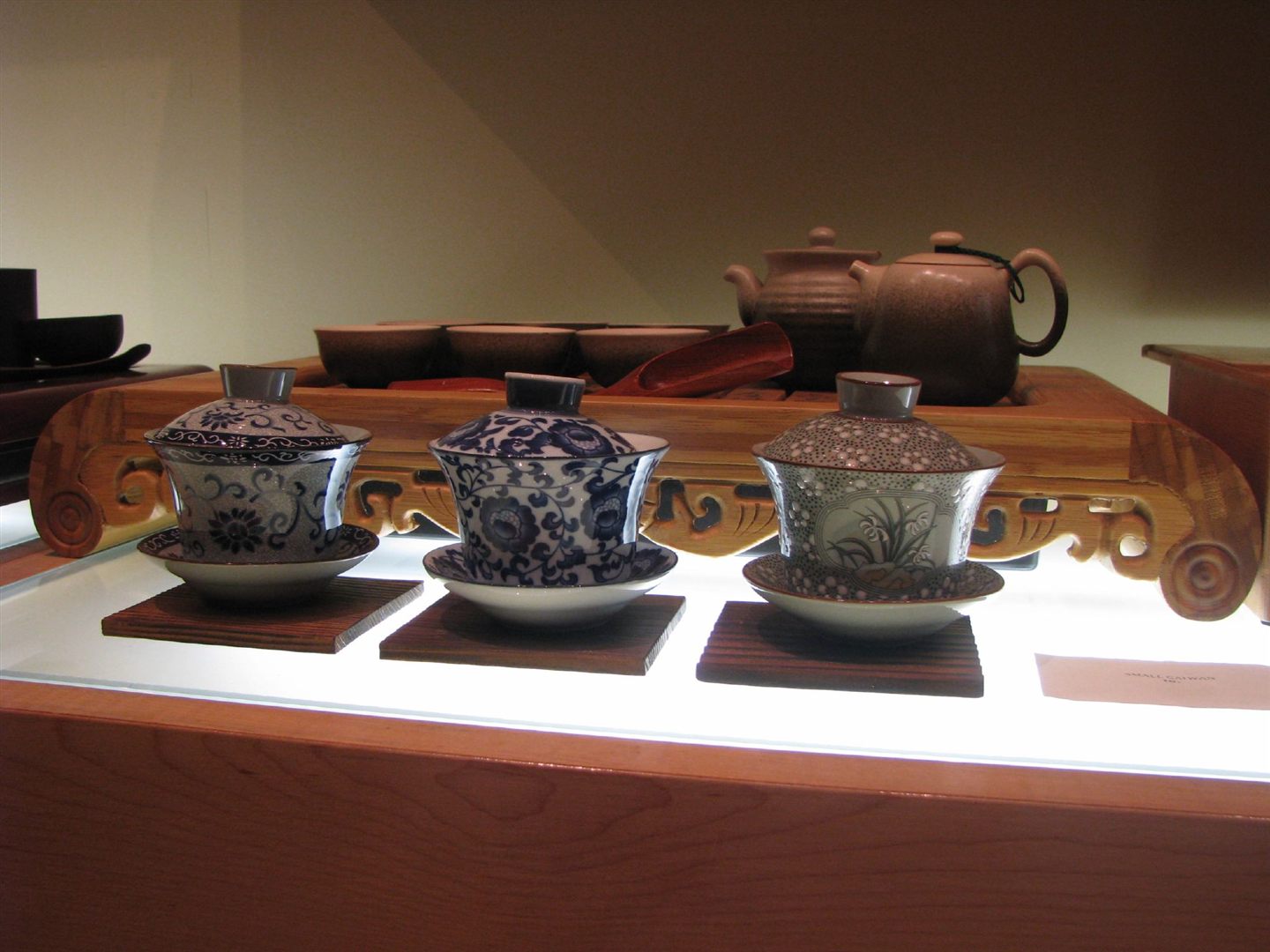
For a roasted oolong trial, begin with about 5 g in a 100–110 ml gaiwan, water around 95°C and a first infusion of 10–15 seconds after filling. Use the maker's directions when given; treat every number here as a starting experiment.
First session: one complete route
Choose a roasted oolong and check its packet first. For the cautious trial used throughout this guide, set a 100–110 ml working-volume gaiwan on a stable surface and weigh 5 g of leaf. Put a cup or pitcher beside it, large enough to hold the whole infusion, plus a bowl for discarded water. Heat drinking water to about 95°C. No specialist tray or ceremonial sequence is needed.
Add leaf and fill below the rim. If this particular producer recommends a rinse, make it brief and pour it away; otherwise make the first addition the first drinkable infusion. Start timing when water first touches the leaves and decant after about 10–15 seconds. Empty the liquor into the cup or pitcher as completely as is comfortable, keeping fingers away from steam. Taste only after it cools enough. Refill at a similar temperature: add a few seconds if the first cup was thin, or shorten the next pour if it was too strong.
| Prepare | Do |
|---|---|
| Vessel and leaf | 100–110 ml working volume; about 5 g roasted oolong |
| Water and first pour | About 95°C; decant after roughly 10–15 seconds |
| Second pour | Use similar water; change time by taste |
| Finish | Decant fully; stop when the cup no longer appeals |
This is a measured trial for one tea style. The producer's recipe takes priority.
- MeasureMatch leaf to vessel volume
- InfuseBegin with a short steep
- Decant fullySeparate tea from wet leaves
- Taste and adjustChange time for the next pour
Follow the recipe for your particular tea first. Keep a hot vessel on a stable surface and use only a grip you can control.
Set out only the tools you need
Use a small porcelain gaiwan or teapot with a known working capacity. Set it on a stable surface. Add a cup, or a sharing pitcher if several people will drink the same infusion. A small strainer is optional if leaf fragments bother you. Keep a bowl nearby for warming water and spent rinses. A towel catches drips, but it does not make a crowded, unstable setup safe.
Measure the volume with cool water before the session. A gaiwan sold as 120 ml may hold less when lidded and safely filled. Record the working volume rather than relying on its advertised brim capacity.
Choose a tea and a first ratio
A rolled oolong, Wuyi rock tea or many ripe pu-erhs are useful starting teas because they can be poured repeatedly. The dose should reflect the tea, leaf shape and your tolerance for strength. For a cautious roasted-oolong trial, place 5 g in a 100–110 ml gaiwan and use water around 95°C. Some producer recipes use 7–8 g in roughly the same volume and much shorter first pours. Those are different workable ratios, not competing universal rules.
For a delicate green tea, copy the producer's cooler-water and lower-dose advice instead of applying a Wuyi recipe. If the packet has instructions, start there. If it does not, write down your initial leaf weight and water setting so a weak or overpowering cup can be changed deliberately. See water temperature and quality if the water itself tastes distracting.
| Leaf | Where to begin |
|---|---|
| Roasted oolong | Use this page's measured first session, then adjust |
| Floral Tieguanyin | Use the style-specific Iron Buddha guide |
| Da Hong Pao | Compare its gaiwan and larger-cup methods |
| Tender green tea | Follow the maker's gentler temperature and dose advice |
Working vessel volume, leaf shape and producer directions matter more than a family-wide formula.
Warm the vessel and start cleanly
Heat safe drinking water. A brief swirl of hot water through the empty vessel can warm it; pour that water away before adding the dry leaves. Warming is optional, especially when you want to hold down the temperature for a delicate tea. Put the measured leaf in, smell it if you wish, and add the brewing water without filling the vessel to the rim. Keep fingers clear of the kettle stream and the steam under the lid.
Some tea makers specify a quick rinse for a tightly compressed or rolled tea. Others go straight to the first drinkable infusion. Treat the rinse as a product-specific choice, not a hygiene guarantee or mandatory ritual. If you rinse, pour it off promptly and count the next addition of water as the first infusion. Check a compressed pu-erh's own instructions before deciding how to open and rinse it.
Time and completely decant the first infusion
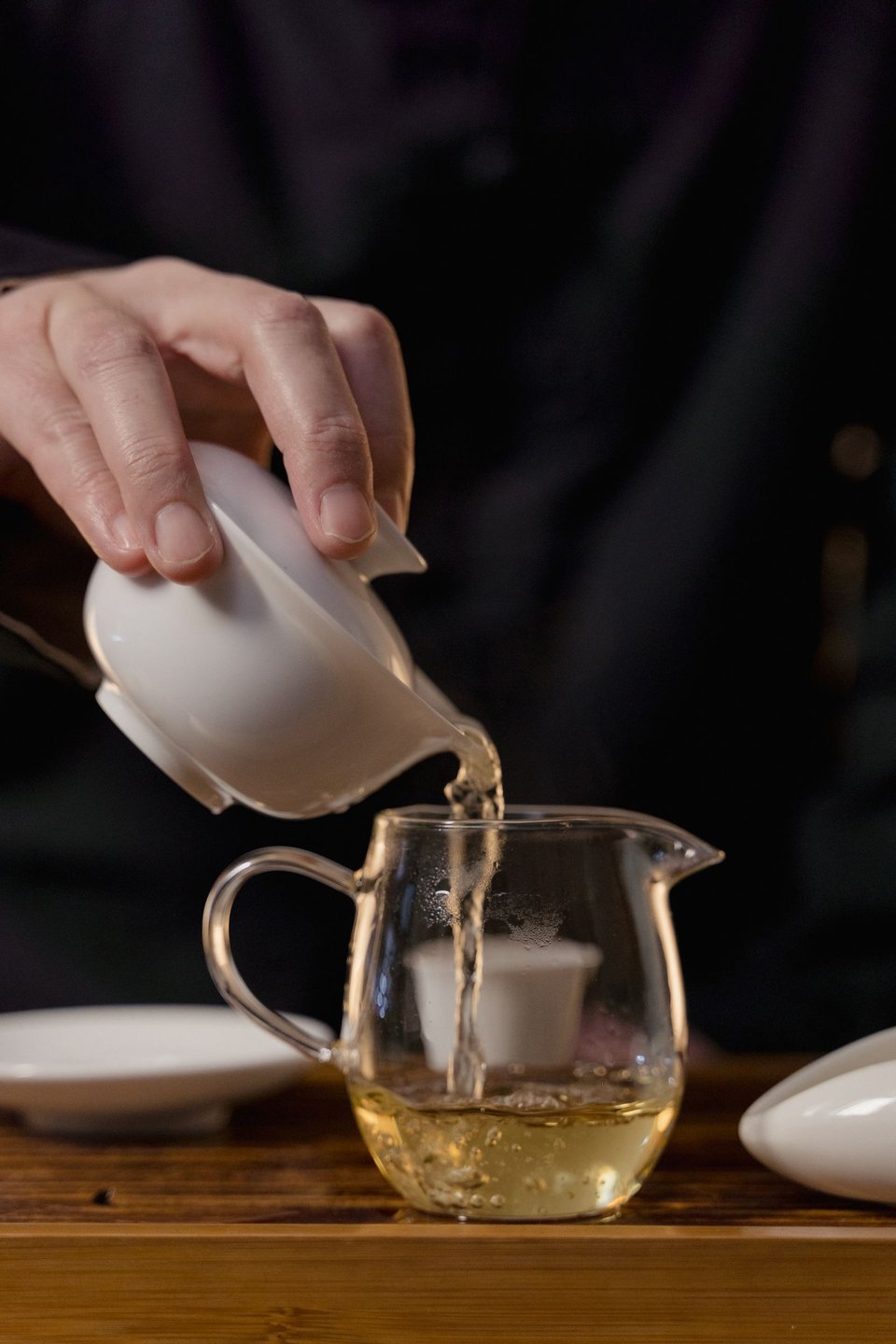
Start timing consistently, such as from the moment water first touches the leaves. With the 5 g roasted-oolong trial, pour after about 10–15 seconds. Tip the gaiwan through a controlled lid gap into the pitcher or cup. Empty the liquor as fully as you can without shaking hot leaves toward your hand. If liquid remains over the leaves, it keeps extracting while you taste and makes the next timed pour less predictable.
A pitcher combines the whole infusion before serving several cups, so the first person does not receive a different strength from the last. If you are drinking alone, pour directly into a cup large enough for the full vessel. Let the tea cool before tasting. A very fast first infusion may be quiet while rolled leaves open; judge the next few pours as well.
Repeat, taste and lengthen only as needed
Refill with water of similar temperature and make another short infusion. Taste the change in aroma, body and finish. If the first cup was thin, add perhaps five seconds next time; if it was strong or rough, shorten the next pour. Later infusions often need more time, but there is no fixed schedule because leaf, dose and water differ. Keep each round separate when you want to notice that progression.
Use the same cups and pour volume where practical. If guests join, a pitcher helps divide a round evenly. Stop when the tea no longer makes a cup you enjoy. Spent leaves can be inspected for their shape and smell, then disposed of normally.
Change one variable for the next session
If the first two pours are thin, try slightly more leaf or a somewhat longer first infusion on the next attempt. If the liquor is drying or harsh, shorten the pour, reduce the leaf next time or consider the tea's recommended temperature. Do not change all three at once. A rolled oolong may need a little time to unfold, while broken fragments can release flavour quickly.
If consecutive pours differ unexpectedly, check the basics: did you fill to the same level, start timing at the same point, and decant fully? A pocket note with tea name, vessel volume, grams, temperature and first three times is enough to repeat a good session. If the vessel is uncomfortable to pour, use an infuser basket or a small pot with a handle until you are ready to practice the gaiwan handling guide.
Know when a larger cup is simpler
Gongfu is one way to explore a tea, not a test of seriousness. A mug with a removable infuser gives a larger, slower infusion and is easier to use while working. For the same roasted oolong, a modest trial is about 3 g in 200–250 ml of hot water, checking after roughly two minutes. Adjust from the packet and your cup. The proportions and times cannot be copied unchanged from a 100 ml gaiwan.
Try both methods with the same tea on different days. The mug gives a blended impression of a longer extraction; small successive pours reveal a sequence. Choose the result and workload you prefer. For a broader beginner route before using any small vessel, see how to brew Chinese tea.
