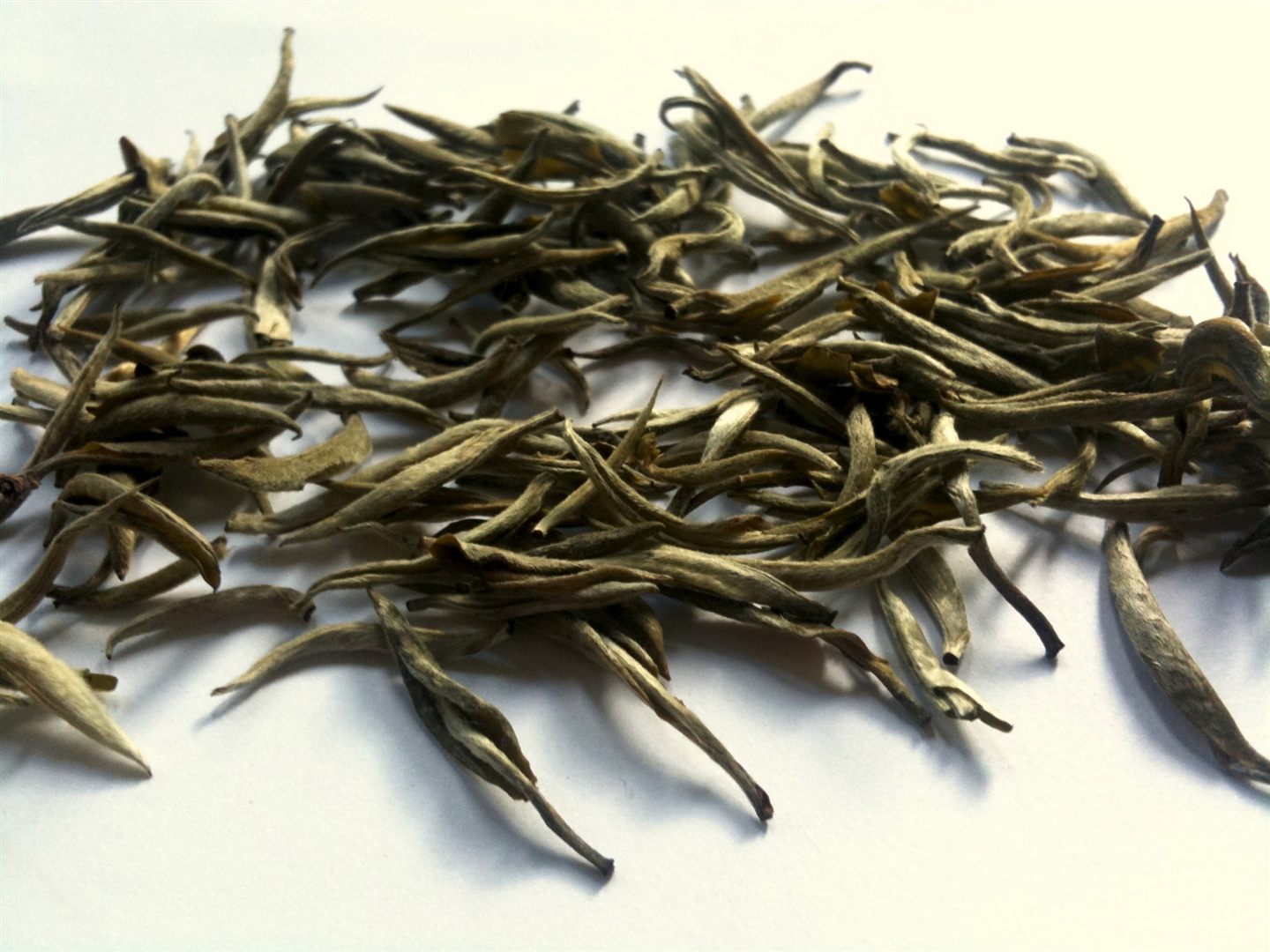
First mug: begin with 3 g in 200 ml; try about 80–85°C for Silver Needle or 85–90°C for White Peony, then taste after two minutes.
Begin with withering and drying
The central white-tea work is carefully managed moisture loss. Withering lets freshly picked material change gradually before final drying makes it suitable for keeping. Unlike a typical green tea, white tea is not promptly pan-fired to stop enzymatic activity. The result can be lightly oxidized, though the degree depends on handling and conditions. Calling the tea unprocessed misses the maker's decisions about timing, airflow, weather, and the final dry leaf.
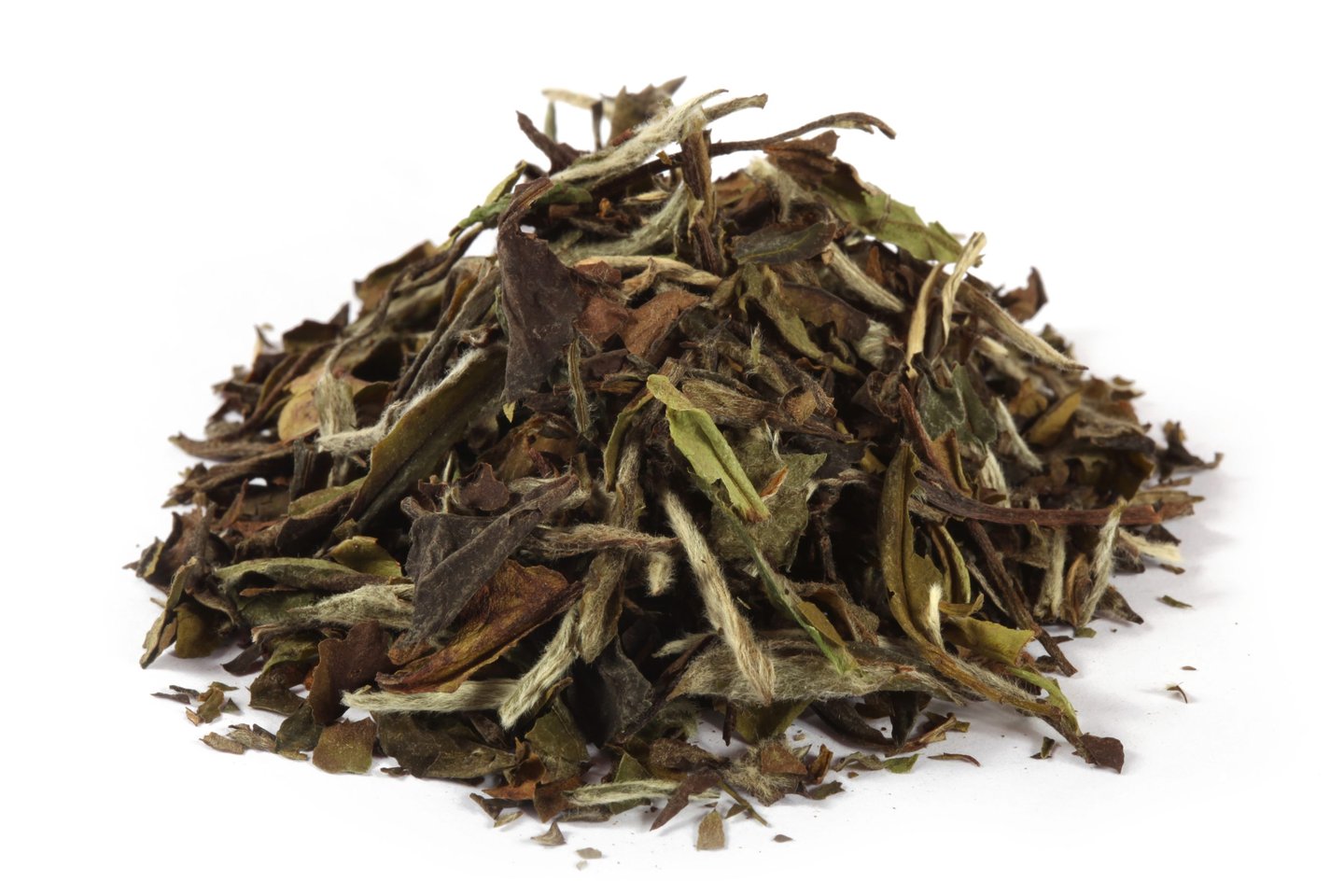
White is a traditional category, not a promise of white liquor or white leaves. Fine pale hairs can cover buds, while older leaves may dry to olive or brown tones. A cup can be light gold or deeper amber. The visible shade is one clue among many; it cannot establish exact age, quality, or a guaranteed flavor.
Choose by bud, leaf, form and age
Bai Hao Yin Zhen, commonly called Silver Needle, is associated with plump young buds. TeaVivre's production account describes withering followed by drying rather than frying. Bai Mu Dan, or White Peony, includes a bud with leaves, so its leaf material can give a fuller impression. Shou Mei tends to use more mature material; it is another style to look for if you want a rounder, less bud-focused cup.
Gong Mei is a fourth name to know, but its boundary with Shou Mei has shifted in seller usage. TeaVivre describes a newer standard that distinguishes Gong Mei by Qunti tea-plant material. If that difference matters to your purchase, ask the maker which leaf standard they use rather than relying on the English name alone.
These names help you anticipate form and possible intensity, not award a universal grade. Compare actual leaves and a producer's description. A bud-only tea can be subtle, whereas a leafier tea may produce a more direct taste in a mug. You may prefer either. A tea sold simply as white tea deserves a question about its leaf style and where it was made.
| Name | Typical picked material | What to check |
|---|---|---|
| Bai Hao Yin Zhen (Silver Needle) | Single young buds | Check that the pictured leaf is bud-focused |
| Bai Mu Dan (White Peony) | A bud with one or two leaves | Expect more visible leaf than Silver Needle |
| Gong Mei | Bud-and-leaf shoots; definitions differ by standard | Ask about the maker's cultivar and picking standard |
| Shou Mei | Leafier, more mature material | Compare the actual leaf and producer's brewing advice |
Loose versus pressed cake describes form; a year describes production or storage. Neither alone is a quality grade.
Use origin information carefully
Fujian is central to familiar Chinese white-tea traditions, and producers describe both Fuding and Zhenghe examples. Origin can tell you which local making practices to investigate. It does not mean every packet from one place will taste the same. Leaf cultivar, harvest, degree of withering, and storage influence the finished tea too.
Ask for the named style, origin, harvest or production year if known, and the maker's brewing advice. If an older tea is being offered, ask how it was stored and evaluate its clean aroma and cup. A year on a wrapper is useful identification, not independent proof that the tea has improved. Begin with a small amount when a description is new to you. A cake may be convenient for keeping a larger quantity, while loose tea lets you inspect and measure leaves easily; choose the form that fits how often you will brew it.
Make a first mug you can repeat
Use a roomy infuser: large white-tea leaves need space, and a teaspoon is a poor measure of their weight. Try 3 g to about 200 ml of safe drinking water. For Silver Needle, start around 80–85°C; for White Peony, try 85–90°C. Taste after about two minutes, then lift the infuser when the balance suits you. These are exploratory numbers, so use the packet's method when it is more specific.
A very pale cup is not necessarily under-brewed. Notice aroma and the feeling of the finish before adding more leaf. If you want another infusion, add fresh water and taste again. Later pours can differ from the first, but the useful count depends on your leaf, dose, and vessel. A mug is enough to learn whether you enjoy the tea's character. Some makers recommend hotter water or a longer first infusion, particularly for different pickings and compressed teas. Treat the numbers here as a repeatable trial, then compare the producer's method in your own cup.
Respond to a quiet or rough cup
If Silver Needle seems too quiet, extend the first steep a little before raising the dose. White Peony may respond well to a slightly warmer pour or more time. Change one factor at a time. If a cup becomes rough, shorten the contact time on the next try; a high temperature is not always the sole cause. Weighing the leaf makes those comparisons far easier than relying on the volume of airy buds.
Water matters when a subtle tea seems flat. Taste the water alone and compare with another safe drinking water if needed, keeping the leaf and timing the same. An unpleasant foreign smell in the dry leaf is a storage question, not an invitation to mask it with hotter water. Do not drink visibly moldy tea.
Store it for the cup you want now
For everyday use, keep white tea clean, dry, out of sunlight, and away from cooking aromas. Its original opaque pouch or a dry, food-safe tin is often sufficient. Close it well after each use. A large supply can be split so the part you open regularly does not expose the rest to repeated air and humidity. A cool cupboard suits many households better than the fragrant kitchen shelf.
Some producers discuss aging white tea, but age is not a self-executing upgrade. Leaf quality and storage conditions matter, and a damp or musty tea should never be treated as a desirable aged style. If you intend to keep a tea longer, retain its identifying label and follow the maker's advice. Judge an older packet by clean condition and flavor rather than the date alone. White tea contains caffeine despite its pale name; leaf choice and brewing change the cup, so the family label gives no dependable low-caffeine promise.
Know what white tea is not
A tea made from pale buds is not automatically white tea. Its processing determines the category. Yellow tea, for example, goes through a heat-fixing stage and controlled yellowing; white tea's withering route is different. Scented white tea can exist, but an added scent is separate from the underlying family. These distinctions matter when a packet uses a poetic name without explaining how the leaf was made.
Try Silver Needle and White Peony with the same water and mug, then record which balance you prefer. If the bud-only cup interests you, the site's Silver Needle page explores that style in greater detail. If you prefer more body, a leafier white tea is a logical next comparison. Let the taste guide that decision instead of assuming that delicacy is a requirement for a good tea.


