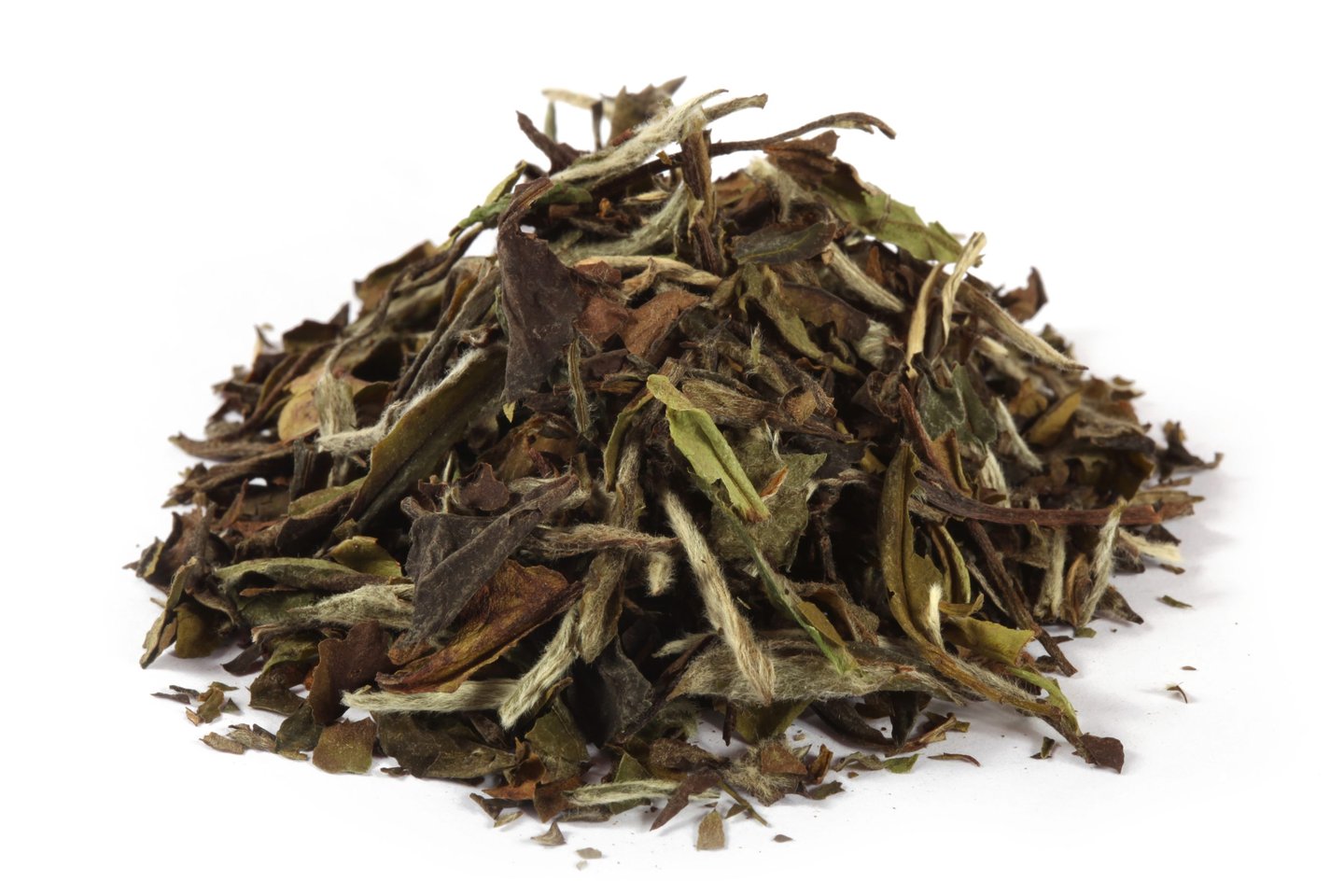
First mug: try 3 g of White Peony in 200 ml of water around 85–90°C; taste after two minutes and lift the leaves when balanced.
Check which plant is in your cup
Bai Mudan tea is made from Camellia sinensis, the plant used for true tea. White tea refers to how its leaves are handled after picking. Peony roots or flowers sold as herbal ingredients belong to Paeonia, a separate botanical genus. Kew's plant records identify Camellia sinensis and Paeonia lactiflora as different species. The common word peony therefore cannot tell you what a packet contains; the ingredient name can.
A label that says White Peony tea or Bai Mudan should identify tea leaves. A label listing peony root, peony flower or Paeonia describes a different infusion. Some blends may contain more than one ingredient, so read the full panel. This is a question about identity, not a reason to infer an effect on the body from either plant. If the ingredients are unclear, ask the seller for a plain list before using the packet.
Look for both buds and young leaves
White Peony commonly includes a silvery unopened bud together with one or two young leaves. A producer may select a tighter one-bud-one-leaf picking for a particular lot; another may describe a bud with two leaves. That variation makes the named style more useful than an overly rigid visual rule. The leaves can be greenish, olive or brown, with pale hairs especially visible on buds. Judge what is actually in the packet rather than a single promotional image.
Silver Needle, also called Bai Hao Yin Zhen, is associated with buds alone. White Peony's additional leaf material can produce a fuller cup, although cultivar, harvest and brewing still matter. Do not assume the leafier style is automatically stronger in caffeine or that the bud-only style is always more delicate to every palate. To learn the difference, brew clearly identified examples at measured weights, then describe their actual aroma, body and finish.
Understand withering and final drying
After picking, white-tea makers spread the material to wither, then dry it for keeping. They manage airflow, moisture loss and timing rather than simply leaving leaves unattended. Unlike a typical green tea, white tea is not immediately heat-fixed to halt leaf enzymes; some gradual oxidation can occur as it withers. The final dry leaf may retain its natural bud-and-leaf shape. A producer's photographs of trays and withering racks show why the craft involves decisions even when the finished tea looks loose and unrolled.
Fujian is closely associated with Bai Mudan, and listings may specify Fuding, Zhenghe or another place. Region is worth recording, but the name alone does not make every Fujian lot taste alike. The tea-bush variety, picking standard, weather during withering and finishing all change the material. Ask for the place and making notes where available. A clearly stated harvest year is useful identification, but it is not proof of quality or a promise that an older packet has improved.
Choose a clearly identified first sample
For a first packet, look for Camellia sinensis on the ingredients, the name Bai Mudan or White Peony, and a photograph that shows buds and leaves. A Fujian area, producer, harvest or packing date and product-specific brewing instructions make the listing more useful. An organic label can describe a production claim; it cannot tell you the exact flavor of an untried tea. A grade word also needs the maker's explanation, since sellers do not all present the same picking standard in the same way.
Buy a small amount if possible and keep the original label. It is easier to learn from one described tea than from a bulk anonymous white-tea blend. If you want to compare with Silver Needle, seek similar harvest years and brew both in the same water. Do not force identical timing if the two makers give substantially different instructions; record each method and then make a second, controlled comparison. The aim is to understand the particular leaves in front of you.
Give roomy leaves a measured first mug
White Peony leaves can be large and light, so weigh 3 g rather than counting teaspoons. Put them in a roomy removable infuser with about 200 ml of pleasant drinking water at 85–90°C. Taste at roughly two minutes and remove the leaves when the cup seems balanced. This is a cautious starting trial from the wider white-tea guide. A named product may recommend a different dose, temperature or time, and its own directions deserve the first try when supplied.
A pale cup may still have aroma and a pleasant finish. If it feels thin, extend contact a little before adding more leaf next time. If it becomes rough, shorten the next brew. Empty the infuser completely instead of leaving some liquid steeping while you drink. The same leaves can often make another useful cup; taste the next pour rather than expecting a fixed number. Record your adjustments so you can tell whether the change helped.
Explore shorter pours in a small vessel
If you own a gaiwan, try about 4 g in 100 ml of water near 85–90°C and a short first pour of 20–30 seconds. Decant fully and taste before deciding the second pour's length. This is an exploratory method rather than a universal White Peony formula; large, leafy material and tiny bud-heavy pieces can extract differently. A small vessel makes it easier to notice a sequence of changing aromas, while the mug gives a simple everyday cup.
When comparing methods, keep the tea and water the same and write down dose, temperature and time. A hotter, shorter pour and a cooler, longer mug infusion need not produce identical results. Follow the tea you actually have instead of assuming one approach is the correct ceremony. If you have only a mug, a roomy infuser already gives you enough control to learn the leaf.
Keep it clean and avoid caffeine assumptions
Keep the working packet well closed, dry and away from light, heat and strong odors. Retain its harvest and packing details so a later comparison refers to the right lot. If a seller offers an older White Peony, ask how it was stored and inspect the tea for a clean aroma; a printed year alone is not a tasting verdict. Do not deliberately expose leaves to damp conditions. The producer's storage instructions are the most relevant for a particular pack.
Bai Mudan is made from the tea plant and contains caffeine, though the amount in a cup depends on the leaf and how it is brewed. A bud-and-leaf ratio is not enough to calculate milligrams or promise that White Peony is lower than another tea. If you are comparing caffeine exposure, treat the specific serving size and preparation as relevant. The plant distinction at the start also matters here: a Paeonia herbal product is a different ingredient, not a caffeine comparison within the white-tea family.
Sources and further reading
- Kew, Camellia sinensis botanical record
- Kew, Paeonia lactiflora botanical record
- European Medicines Agency, white peony root botanical identity
- Seven Cups, Bai Mudan plucking and production
- Rishi Tea, White Peony bud-and-leaf description
- Experimental study, caffeine in six tea families under different brewing conditions
