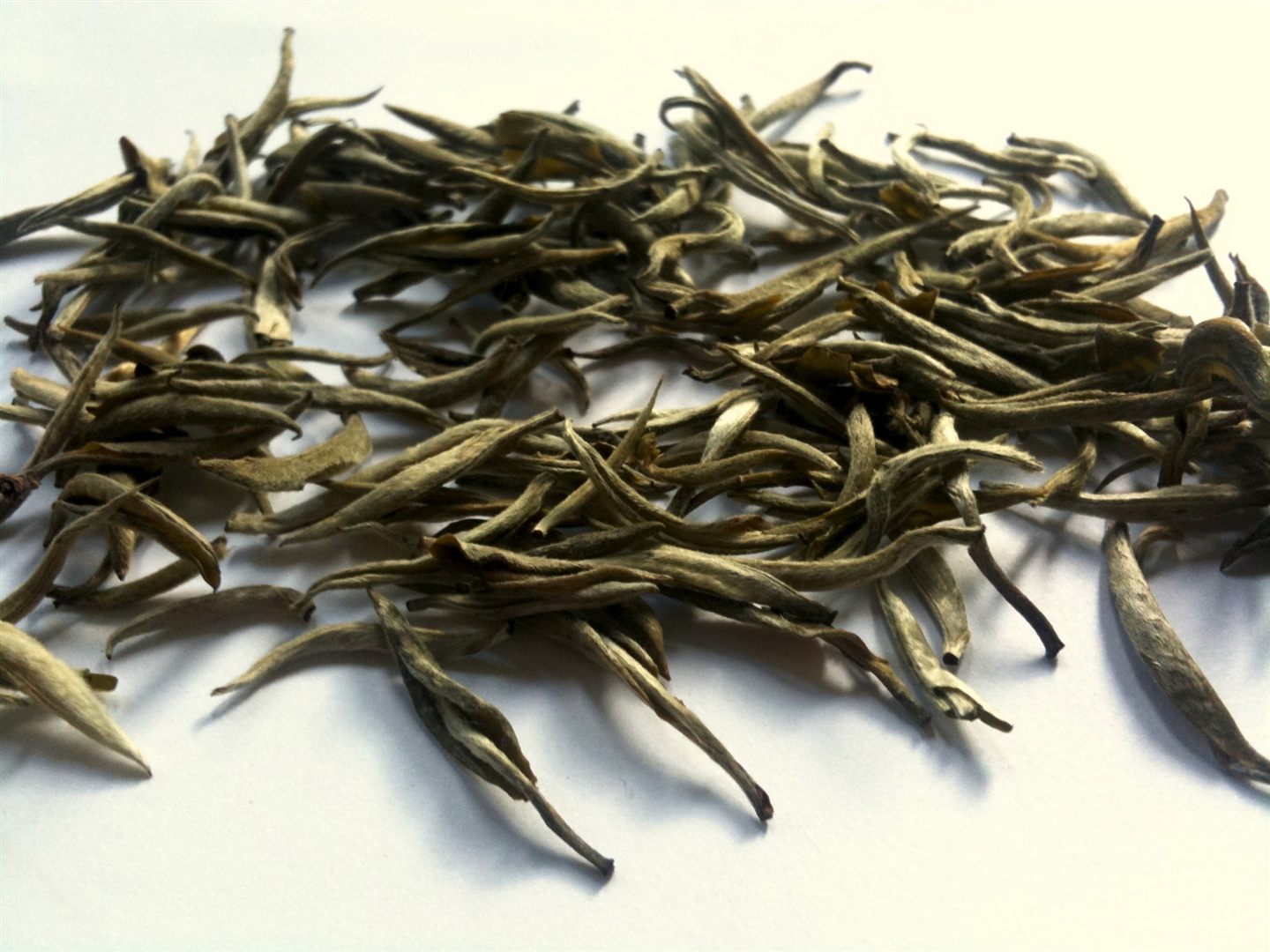
What makes a tea Silver Needle?
A recognisable Silver Needle is made predominantly from intact young buds rather than a mix of mature leaves and stems. The downy covering is a natural feature of the buds, not added flavouring or a sign that the tea is dusty. The Chinese name Bai Hao Yinzhen points to those fine hairs and the needle-like form. A packet may also name a place, harvest or tea cultivar; those details identify a particular lot rather than the entire category.
Fuding and Zhenghe in Fujian are important white-tea areas, and official Fujian accounts describe Fuding Silver Needle among the region's white teas. The name Silver Needle on its own does not establish a Fuding origin. Check the seller's stated production area if that matters to you. Bud-only picking can affect price and appearance, but neither pale colour nor a prestigious place name guarantees that you will enjoy the cup.
How white tea processing differs from green tea
The central steps in traditional white-tea making are withering and drying. Fresh buds lose moisture over time, then are dried sufficiently for storage. Conditions and drying methods vary with weather and producer: white tea is not necessarily left in direct sunshine from start to finish. This relatively restrained handling helps the buds keep their form. It also allows subtle changes during withering, so ‘minimally processed’ does not mean nothing happens after picking.
Green tea is generally heated early to stop enzymatic oxidation, a step commonly called fixation. White tea is not defined by that early fixation step. Heat may still be used to finish drying some white teas; drying with heat serves a different purpose from early green-tea fixation. Consider when and why the heat is applied rather than treating all heating as the same step. Withering and drying remain the essential starting points for understanding the white-tea method.
What to look for in the cup
Look for clarity before looking for a dramatic colour. A Silver Needle infusion may be pale straw or light apricot, depending on the leaves and the brew. Producers and official descriptions mention fresh, gentle and sweet impressions; some cups suggest flowers or a soft vegetal edge. These are possible reference points, not a tasting record for your packet. Describe the aroma and the taste separately: a fragrant lid can accompany a very quiet first sip.
Light does not mean flavourless. Let the tea cool enough to drink comfortably and take several small sips. Notice whether the mouthfeel is smooth, whether there is any drying sensation, and how long the aftertaste lasts. If you expect the punch of a roasted oolong or a scented jasmine tea, the contrast can hide Silver Needle's smaller details. Tasting it alone before a more assertive tea gives you a clearer baseline.
Brew a first cup, then adjust
If your packet has instructions, start there. Otherwise, try about 2.5–3 g of buds in 200 ml of water around 80–85°C. Taste after roughly two minutes, then remove the infuser or pour off the liquor when you like it. A producer guide uses approximately 80°C and one to two minutes for its own Silver Needle; other vessels and leaf ratios need different timing. Weighing the buds is easier than relying on teaspoons, because fluffy buds occupy a lot of space.
If the cup seems thin, first check that you used enough leaf. Increase the dose slightly on the next brew or extend the infusion a little. If it seems harsh, try a shorter time or a little cooler water. Change one variable at a time and write down the result. You may be able to brew the same buds again; taste each infusion rather than promising a set number. A small gaiwan with more leaf and short pours is another way to follow how the flavour develops, but it is not required.
- Use water that is safe to drink and pleasant-tasting on its own.
- Give the buds room to move in a broad infuser or small pot.
- Record leaf weight, water volume, temperature and time for a repeatable cup.
Store the buds for the cup you want later
Keep a small drinking supply in an opaque, well-closed container in a cool, dry place, away from sunlight and strong smells. Moisture and kitchen odours are more immediate concerns than chasing a precise shelf-life claim. Close the container promptly after measuring out a serving and avoid leaving delicate buds beside spices or coffee. If the tea develops a musty smell or visible mould, do not brew it.
Refrigeration needs care. A refrigerator can introduce condensation or food odours when a container is opened, especially in a humid room. If a producer gives specific cold-storage advice for a sealed bulk pack, follow its packaging instructions and let the still-sealed pack reach room temperature before opening. Opening a cold container repeatedly can expose the leaves to moist air. For routine use, a dry, dark cupboard and a properly closed container are simpler.
Questions to ask before choosing a packet
Ask which area produced the tea, when it was harvested if known, and whether the packet contains buds only. A seller should be able to explain any special finishing or storage guidance for that lot. If a description says ‘Silver Needle’ but shows many open leaves, ask for clarification; a white tea made with bud and leaf may be a different style. Photographs can help, yet they cannot tell you the final taste or prove origin on their own.
Choose a small amount when learning the style. Brew it twice with a recorded adjustment before deciding whether its delicate character suits you. If you like white tea but want more body, compare another white-tea grade such as White Peony; if you prefer strongly scented cups, the jasmine-pearl guide offers a useful contrast. Silver Needle rewards patient attention, but it does not demand elaborate equipment or a fixed ritual.

