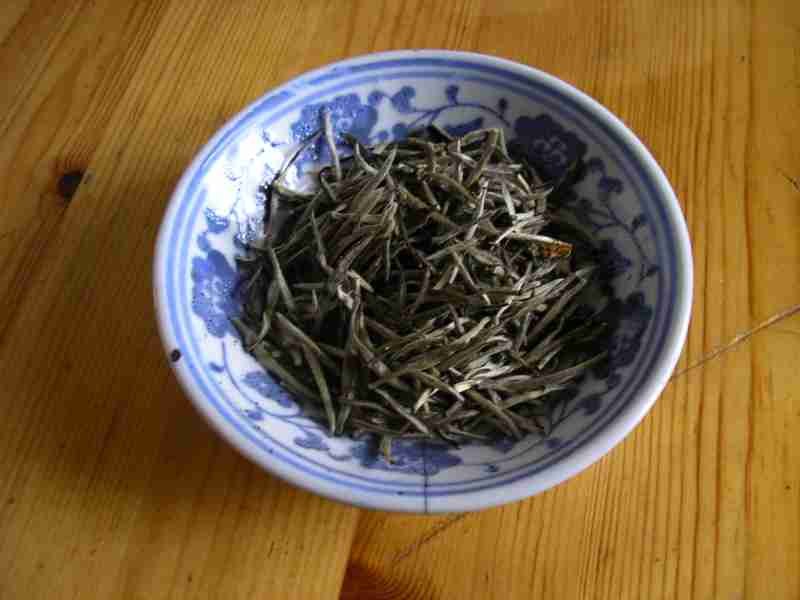
First mug: try 3 g in 200 ml at about 80–85°C, taste after two minutes, and adjust gently; follow the maker's note if supplied.
Follow the extra step after heat fixing
Like green tea, yellow tea usually begins with heat that limits the fresh leaf's enzyme-driven browning. The maker then manages residual heat and moisture while the leaf rests, often wrapped or held in small batches. That menhuang stage encourages changes in color, aroma, and texture before final drying. Some teas go through more than one cycle, and rolling may or may not be part of the route.
Menhuang is a controlled production step, not accidental damp storage after sale. Seven Cups describes Junshan Island makers using repeated cycles of wrapping, resting and roasting, while TeaVivre shows a different Meng Ding Huang Ya wrapped in paper and kept warm for yellowing. These examples show why the word yellow tea names a method but does not specify a single fixed number of hours or one universal taste.
Separate yellow tea from green and white
Green tea has an early heat-fixing stage but normally proceeds toward shaping and drying without deliberate menhuang. Yellow tea inserts that controlled resting stage. Both can make light, fresh cups, so tasting alone may not prove which technique was used. A stale green tea is not made yellow tea by becoming dull or yellowed in a cupboard.
White tea takes a different path: its defining withering and drying generally occur without early heat fixing. A pale bud-only white tea and a yellow bud tea can resemble each other in a product photograph. Ask how the leaf was processed. The answer is more dependable than the color of the dry bud or a poetic name on the front label.
Notice the different leaf styles
Huang Ya means yellow buds. Junshan Yinzhen and Meng Ding Huang Ya are examples associated with tender bud material. Other yellow teas use a bud with leaves, while larger-leaf examples can feel fuller in the cup. TeaVivre groups yellow teas by leaf tenderness and size, a useful way to understand why a dainty bud tea and a more robust yellow tea need not taste identical.
A familiar name does not always guarantee the traditional yellow process. Seven Cups notes that some old yellow-tea names are now also used for green teas. When exploring Junshan Yinzhen, ask explicitly whether the product received menhuang. A clear account of leaf style and production is more informative than a claim of rarity, which neither proves the method nor predicts whether you will enjoy the cup.
| Category | Leaf material | Examples to ask about |
|---|---|---|
| Huang Ya Cha (yellow bud tea) | Bud or bud with one leaf | Junshan Yinzhen; Meng Ding Huang Ya |
| Huang Xiao Cha (small yellow tea) | Tender buds and leaves | Wei Shan Mao Jian; Ping Yang Huang Tang |
| Huang Da Cha (large-leaf yellow tea) | Bud with several larger leaves | Huang Da Cha from Anhui |
A named tea can also be sold in a green-tea version. Confirm the yellowing stage with the producer.
Why is yellow tea harder to find?
The extra menhuang stage requires the maker to manage warm, moist leaf between fixing and final drying. It adds decisions and handling that a comparable green-tea process does not require. Specialist sellers offer far fewer clearly identified yellow teas than green teas, and a familiar old name may appear on a green version too. These observations explain why a shopper may need to search more carefully; they do not establish a precise market share or prove that every yellow tea is costly.
If a listing claims rarity, ask what was done to the leaf. A useful answer identifies the picking, the yellowing stage, and the maker or region. Compare two identifiable examples if you can, perhaps a yellow bud tea and a larger-leaf tea. A higher price can reflect many factors, and the packet's process account tells you more about the family than price alone.
Choose a small, identifiable packet
Look for the named style, region, production or harvest period if known, and an explanation of the yellowing step. Producer notes may mention wrapping, resting, or repeated drying; they need not disclose every craft detail. A seller should be able to distinguish the tea from a similarly named green version. Choose a small amount to start because yellow tea's quieter character may be unfamiliar.
When a listing offers only the word yellow and a vivid image, ask for more information. Yellow liquor can also come from other tea families. A price or a claim that the tea is rare cannot substitute for process evidence. Taste matters after identification: decide whether you like its softness, aroma, and finish, then compare another maker or leaf style rather than treating one sample as the whole family.
Brew without a ceremony
A removable infuser and ordinary mug are enough. As a first trial, use about 3 g of leaf and 200 ml of safe, pleasant water at 80–85°C. Taste around two minutes and lift the infuser when the flavor feels balanced. TeaVivre gives 85°C for its Meng Ding Huang Ya; individual producer instructions vary. For a sturdy larger-leaf tea, the maker may suggest a different dose or heat.
The open cup can be pleasing for viewing buds, but leaving leaves in the water makes the infusion keep changing. An infuser gives a beginner a clearer comparison. If you want a second pour, add water and taste again. Do not expect a guaranteed count of infusions, since leaf size, processing, and how long you made the first cup all affect what remains.
Adjust for delicacy or weight
If the cup seems quiet, extend the steep a little before adding leaf. Notice whether aroma appears as the cup cools. If it turns coarse or bitter, shorten the next infusion or lower the heat slightly. A larger-leaf yellow tea may be more assertive than a bud-only style, so borrow the exact temperature and timing from the packet when available instead of forcing both into one recipe. Yellow tea contains caffeine; its leaf and your brewing choices affect the amount in a cup. The yellowing process is not a reason to treat it as caffeine-free or reliably low in caffeine.
Change one factor at a time and record it. A small scale is useful because airy buds and rolled leaves occupy different volumes. If you compare yellow tea with green or white, use the same safe water and mug, but respect each tea's starting heat. The aim is to hear each leaf clearly, not to prove one family is inherently gentler.
Keep a carefully made tea dry
Once yellow tea has been dried and packed, protect it from moisture, heat, light, and odors as you would another delicate everyday tea. Keep the working packet well closed in a cool, dry cupboard; leave it in opaque packaging or a clean food-safe tin. If the producer recommends colder storage, seal it thoroughly and let the still-closed pack warm before opening to avoid condensation.
Do not try to reproduce menhuang at home by dampening finished leaves. That stage is managed during production, before the tea is fully dried. Damp storage can spoil tea. Discard leaves with visible mold or a distinctly musty smell. Record the opening date and make the tea while its clean aroma is enjoyable, rather than assuming age will make a delicate yellow tea better.
