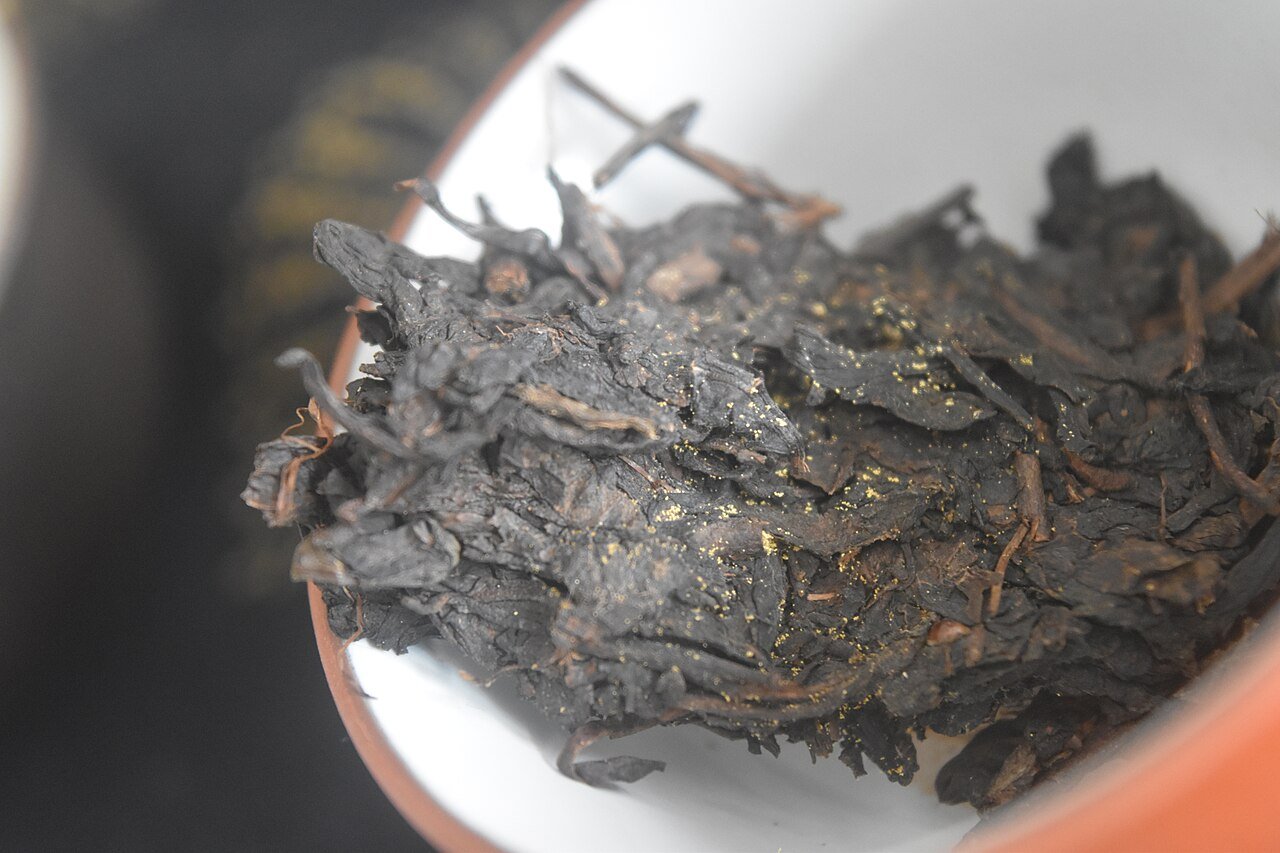
First mug: try about 3 g in 200 ml of freshly boiled water, taste after two minutes and decant when balanced; follow the packet's directions for the lot.
Locate Liu Bao before comparing dark teas
Liu Bao takes its name from Liu Bao village in Cangwu County, within the Wuzhou area of Guangxi. The name is used for a local dark-tea tradition. Heicha, often translated dark tea, covers more than one regional practice; it is not just another name for pu-erh. Wuzhou agricultural material and specialist histories place Liu Bao in Guangxi, while pu-erh is tied to Yunnan. Keep those places distinct even when two cups happen to share a dark liquor.
The family name gives an initial processing clue, but not a full recipe. A seller may offer loose leaf, a basketed lot or a compressed brick. Those are forms in which tea is held or sold; none by itself explains how the leaves were transformed. Ask for the specific producer, source area and process. Without that, a photograph of a bamboo basket says less than a clear sentence about the lot's making.
Ask which processing route made the lot
Historical and specialist accounts describe variation between local farmer processing and more controlled factory production. Leaves may be heat-fixed, rolled, allowed to rest or ferment, and dried; modern factory routes can include deliberate wet piling and later refinement. These steps and their order need to be understood for an identified tea, not projected onto every Liu Bao packet. A lighter, less intensively piled example can differ markedly from a deeply transformed factory lot.
A specialist catalogue calls one particular Liu Bao product raw, meaning that its farmer processing did not involve wet piling. That word helps explain the identified lot, but Liu Bao should not be forced into the universal sheng-versus-shou split used in pu-erh discussion. Ask instead whether the tea was wet-piled, which stage was done by whom, and how it was dried and stored. A basket, a brick and a loose pile can each contain tea made along different paths. The process description matters more than the container.
Find out what each printed date actually dates
A Liu Bao listing can mention a leaf-harvest year, a processing or piling period, and a later packaging date. These are different events. If a packet gives one year without saying which event it records, ask the seller before treating it as the tea's age. A recently packed tea might contain older leaf; an old-sounding name may reflect a recipe or product line rather than the year of every leaf. Keep the wording attached to the actual lot.
For a first sample, useful questions are: where in Guangxi did the leaf come from, who processed it, was it wet-piled, when was it made, and how was it stored? A seller may not know every answer. That limits what you can infer; it does not require a story to fill the gaps. A single old year does not verify geographic origin or guarantee a better cup. Taste and clean storage history deserve as much attention as age language.
Read the form without making it a quality ranking
Liu Bao can be sold loose, compressed or in baskets. A basket may be part of how a lot is held and matured, but its presence alone is not a complete processing record. Compression changes how you take a brewing portion: gently loosen a little leaf and weigh it, because dust and small fragments can infuse faster than intact pieces. Loose leaf is a simple first sample if you do not want to work a brick or tightly packed basket.
A photo can show leaf size, compression and the cleanliness of the package. It cannot disclose the unseen history of a lot. Look for a producer's account and storage information instead of treating decorative wrapping as proof of age or origin. Keep any original wrapper and batch number with the tea. That lets you ask a better question later if the cup is interesting, and keeps one sample from becoming an anonymous dark leaf in a tin.
Try a small, clean first mug
For an initial trial, use about 3 g of loose or carefully loosened leaf in a removable infuser with 200 ml of freshly boiled drinking water. Taste around two minutes and lift the infuser when the balance suits you. A specialist Wuzhou production account recommends boiling water for Liu Bao; your actual dose and time still depend on the lot and your taste. If the maker gives a clear recipe, start there. There is no need to claim that one compulsory rinse makes every tea safe or flavorful.
If the cup seems too dense, shorten contact or use less leaf on the next trial. If it is faint, allow a little longer. A lighter route may give a brighter impression; a more heavily transformed lot may seem woodier or earthier, but these are possibilities rather than notes promised for your packet. Reuse the leaves if another pour tastes pleasant. Record the water, weight, time and your own observation so a second attempt tests a real adjustment.
Make short pours when you want to study change
For a small-vessel experiment, try 4 g in about 100 ml of freshly boiled water and begin with a short pour of roughly 15–20 seconds. Decant fully and taste before lengthening the next pour. The aim is to notice how this particular leaf changes over several infusions, not to chase a prescribed number of rounds. If the tea is very broken or concentrated, reduce leaf or shorten the pour. A roomy vessel and a scale make the trial easier to repeat.
Compare the small-vessel result with a mug made from the same packet. Both can be useful, and neither is a test of whether the leaf is authentic. If you are comparing two Liu Bao production routes, keep the water and vessel consistent first; then use each maker's specific guidance. A dark color may arrive quickly in one tea and slowly in another, so taste rather than using color alone to choose the stopping point.
Keep storage clean rather than trying to force age
Keep the tea in a clean, dry place away from sunlight, damp, perfume and cooking odors. Retain its label and avoid handling leaves with wet hands. Some collectors intentionally manage long-term storage, but that does not make a damp cupboard a sound default for a new buyer. There is no single household humidity number to prescribe for every climate, pack and tea. Start by protecting the small sample you intend to drink, not by trying to manufacture an aged character.
If leaves show visible mold or have an unpleasant musty smell, do not brew them. A clean earthy or woody note in a cup is not the same thing as evidence that visibly contaminated tea is acceptable. An old date can accompany good storage, poor storage or simply a style you dislike. Ask how the tea was kept and judge an intact sample. Keep Liu Bao distinct from the Yunnan pu-erh comparison: the latter guide explains sheng and shou in their own context.
Compare Liu Bao and pu-erh without merging their names
The two traditions can make interesting side-by-side cups, but the label questions differ. Use the table as a reading aid, not a claim that every lot follows the same method. For both, a named source, process account and storage history will tell you more than a dark liquor or an attractive wrapper. If you are new to dark tea, begin with small samples that explain what was done to the leaf, then decide which cup you want to explore further.
Make the comparison with equal leaf weights and the same drinking water. Follow each producer's advice for an initial taste, then use a controlled second trial if you want to examine processing differences. Record aroma, body and finish without requiring either tea to fit a fixed earthy stereotype. The best result is a clearer question for the next packet: which region, maker and route gave the cup you enjoyed?
| Question | Liu Bao | Pu-erh |
|---|---|---|
| Named region | Guangxi, especially Wuzhou and the Liu Bao tradition | Yunnan-associated pu-erh tradition |
| Processing detail | Ask whether and how this lot was piled or otherwise post-processed | Ask whether the lot is sheng or shou and how it was made |
| Form | May be loose, basketed or compressed | May be loose or compressed |
| What a form cannot prove | A basket does not establish a process or vintage | A cake does not establish age, origin or quality |
A producer's description of the particular lot is more useful than a family-wide shortcut.
