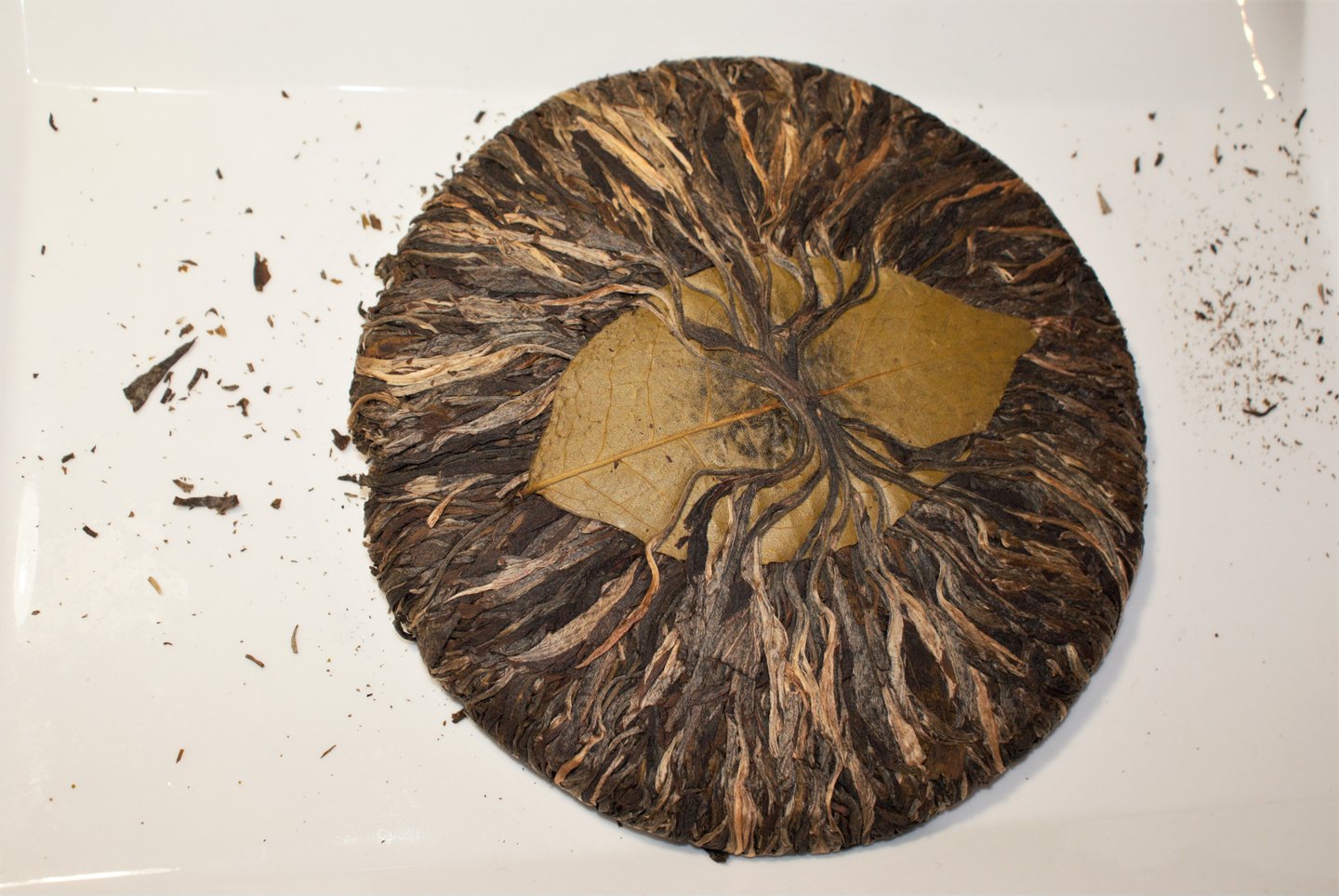
First mug: identify raw or ripe, loosen about 3 g, add 200 ml of hot water, taste after two minutes, and adjust from the producer's note.
Recognize raw pu-erh, or sheng
Raw pu-erh does not go through the controlled wet-piling step. A young example can brew bright, brisk, and sometimes bitter or astringent, with a pale gold to amber cup. Those are possibilities, not requirements for every producer or leaf. An older raw tea can develop deeper color and different flavors as storage changes it, but it remains raw tea because the production route has not changed.
Try young raw tea if you enjoy a more lively, sometimes challenging cup. Ask how an older example was kept, because a date does not tell you whether storage was clean or favorable. Buy a small sample before a whole cake when you are learning. Taste for clean aroma and balance rather than expecting a particular age to guarantee a smooth result.
Recognize ripe pu-erh, or shou
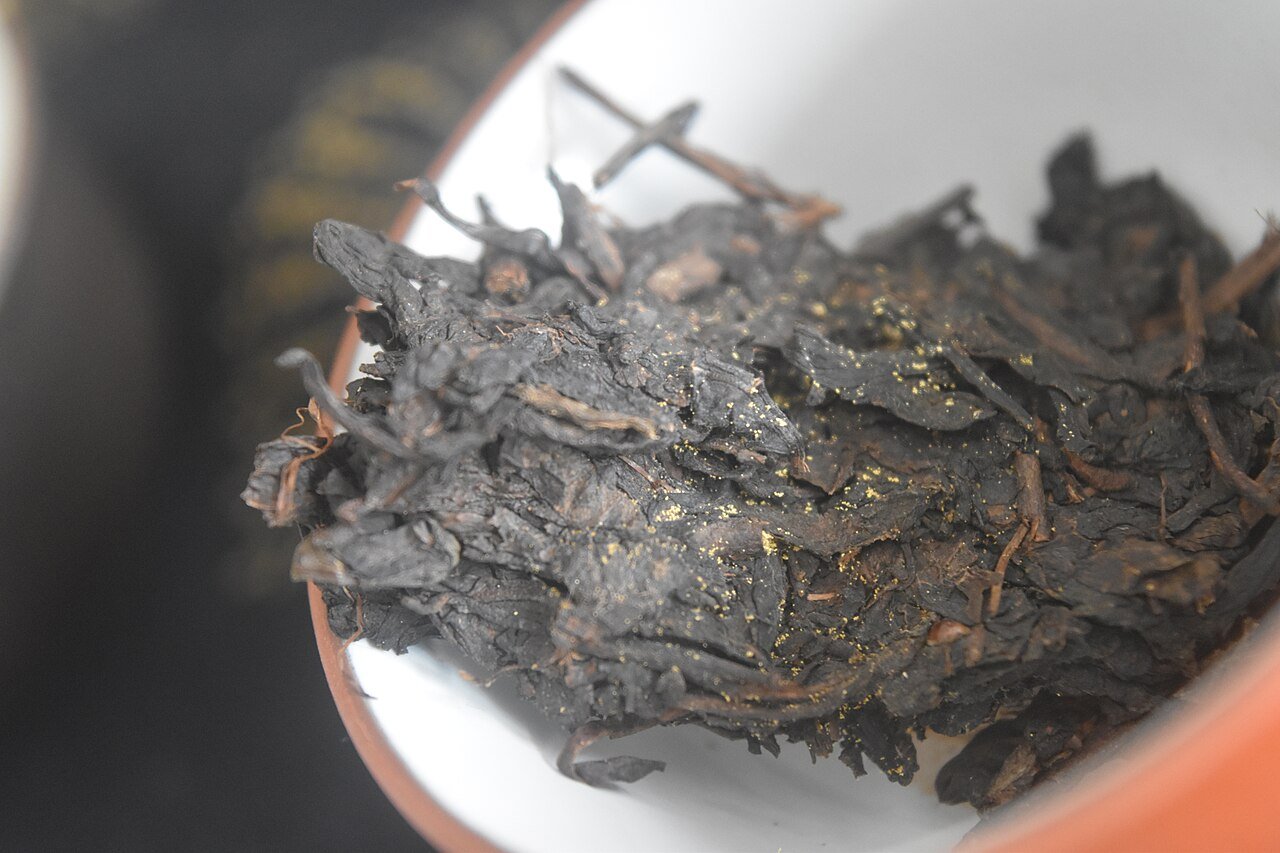
Ripe pu-erh receives wet piling, called wo dui: makers moisten, pile, and turn maocha under managed conditions so microbial activity changes the leaf. It commonly brews a darker red-brown liquor with a round, earthy impression and less of the sharp edge that young raw tea can show. Processing choices vary, so do not expect every ripe tea to taste identical.
A clean earthy aroma is different from a moldy or sour smell. Ripe tea is made through controlled production; an accidental damp cupboard does not make raw tea ripe. TeaVivre explicitly notes that aged raw tea never turns into shou, even if its color deepens. If you want a softer entry into pu-erh, ripe is a reasonable first style to sample, then compare with a young raw example.
Liu Bao is another dark-tea tradition, associated with Guangxi rather than Yunnan. It can make a useful later comparison with ripe pu-erh because both involve managed post-processing, although their leaf and production routes are not identical. Keep the names separate on your tasting notes rather than calling every dark cup pu-erh.
Choose raw or ripe before the story takes over
Look for raw or ripe, the maker or factory if known, Yunnan area, production year, and a clear statement of storage history for older tea. These details make a purchase understandable and allow you to compare later. A famous mountain name, old-tree claim, or elaborate wrapper may interest a collector, but none independently verifies the leaf or predicts what you will taste.
Aging and price are particularly easy to overread. Good raw tea may evolve in suitable storage, but time can also expose poor storage or simply produce a result you do not like. Ripe tea is already transformed by wet piling; an older date is not automatically better. Choose by the actual cup and trustworthy information. Small samples let you explore several styles without committing to a full cake.
If you are choosing a first comparison, buy a small young raw sample and a small ripe sample with clear production details. Brew them in separate vessels at a modest strength. Note liquor color, aroma, dryness or astringency, and how the cup changes as it cools. A dark young ripe tea and an older raw tea can look superficially similar, so the production label matters more than a photo of the liquor.
| Packet term | Production clue | Useful first question |
|---|---|---|
| Sheng / raw | Sun-dried maocha without managed wet piling | Is it young or older, and how was it stored? |
| Shou / shu / ripe | Maocha additionally transformed through managed wet piling | Who made it, and is its aroma clean? |
| Cake, brick or loose leaf | Physical form, possible with either process | How much is in the portion, and how easily can I separate it? |
Aged raw tea remains raw; a dark liquor or compressed shape alone does not identify the process.
Loosen a cake with care
For a pressed cake, work on a stable surface and aim a tea pick or small blunt tool away from your hand. Ease a little leaf from an edge or existing layer instead of stabbing straight down. Keep pieces as intact as practical, but do not worry if some break. Put the rest of the cake back in clean, dry storage with its identifying wrapper.
If the compression is difficult, use a small loose-leaf sample for your first brew rather than forcing the cake. Fragments and dust infuse faster than larger loosened pieces, so check the cup sooner when your portion is very broken. Compression itself does not mean the leaves require a complicated ceremony or a mandatory rinse before every mug.
Make a practical first mug
Use about 3 g of loosened tea and 200 ml of safe drinking water in a removable infuser. Start near boiling for many ripe teas; a young raw tea may be easier to approach a little cooler, around 90–95°C. Taste at about two minutes and remove the infuser when the balance suits you. Follow specific producer instructions when supplied, since bud content, compression, and leaf size change extraction.
If raw tea is harsh, shorten the next steep or cool the water slightly. If ripe tea is too dense, use less leaf or pull the infuser sooner. A thin cup can take a little more time or leaf next time. Change one factor at a time. Reuse the leaves if they still give a pleasant cup, allowing more time as needed without expecting a fixed number of infusions.
Use a small gaiwan for short, separate pours
A gaiwan gives a different comparison from the 200 ml mug: use a small heat-safe vessel, a cup or pitcher to receive each pour, and a scale. The product-specific recipes below use a roughly 110 ml gaiwan, with 8 g of raw leaf or 10 g of ripe leaf. These are concentrated trials, not compulsory ratios. Warm the vessel if you like, add the loosened leaf, and pour carefully so hot water and the lid stay away from your fingers. Empty each infusion fully into a separate vessel so the leaves do not keep brewing between pours.
For raw pu-erh, TeaVivre's raw-cake example uses about 95°C water and a first pour around 10 seconds after a brief optional rinse. Taste promptly; if a young raw sample is sharp, shorten the next pour or use slightly cooler water. For its ripe-cake example, TeaVivre uses boiling water and similarly short early pours, with two quick rinses in that particular recipe. Rinsing is a producer choice, not a universal requirement or a way to make unsafe tea safe. Ripe leaf may need a little time to open if tightly compressed; use the actual cup to decide when to lengthen later pours.
These examples do not impose one steep count on both teas. If a pour is weak, add a few seconds next time; if it is too dense, pour sooner or lower the dose on the next session. A producer may use a lighter dose and longer steeps, as Seven Cups does in its general gaiwan guide. Follow a specific maker's instructions when supplied, then note what your own leaf and vessel produce.
Store pu-erh cleanly and dry
Keep cakes and loose tea away from direct sun, damp rooms, kitchens, perfumes, and strong food smells. A clean, dry cupboard with stable conditions is a sensible household starting place. Keep raw and ripe teas separately if you have several, so their aromas do not mingle. Retain the wrapper or label and avoid handling the leaf with wet hands.
Some collectors manage humidity to shape long-term development, but that is not a reason to encourage visible mold or a musty smell. TeaVivre advises clean air and protection from moisture and odors. Do not deliberately wet a cake, and discard tea with visible mold or an unpleasant musty odor. A refrigerator designed for fresh food is generally a poor place for an unsealed cake because of condensation and food odors.
Sources and further reading
- TeaVivre, raw and ripe pu-erh processing
- TeaVivre, why aged raw tea remains raw
- TeaVivre, pu-erh storage conditions
- TeaVivre, safely loosening a cake
- TeaVivre, raw pu-erh 110 ml gaiwan recipe
- TeaVivre, ripe pu-erh 110 ml gaiwan recipe
- Seven Cups, general small-vessel brewing method
- TeaVivre, distinction between pu-erh and Liu Bao dark tea

