First mug: start with 3 g in 200 ml of water around 90–95°C, taste after two minutes, and lift the infuser when the balance is right.
Understand the oxidation stage
Makers commonly wither picked leaves, roll them to bruise the tissue, allow enzymatic oxidation to develop, then dry the tea to finish it. Describing this as oxidation is clearer than calling it fermentation: the usual black-tea stage is not the microbial wet piling used for ripe pu-erh. Exact handling differs among producers, and the finished leaf may be whole, twisted, or broken.
Dry leaves can appear almost black while the brewed liquor is copper, amber, or deep red. Chinese hong cha names that cup rather than demanding a precise color. Oxidation does not prescribe one taste. Cultivar, picking, leaf size, heat, and finishing choices change the result, which is why two black teas brewed with the same recipe can still feel quite different. English shop menus sometimes group dark-looking teas together; pu-erh and other post-processed dark teas follow a different route. Check the packet's processing description when the category label is loose.
Meet Keemun from Anhui
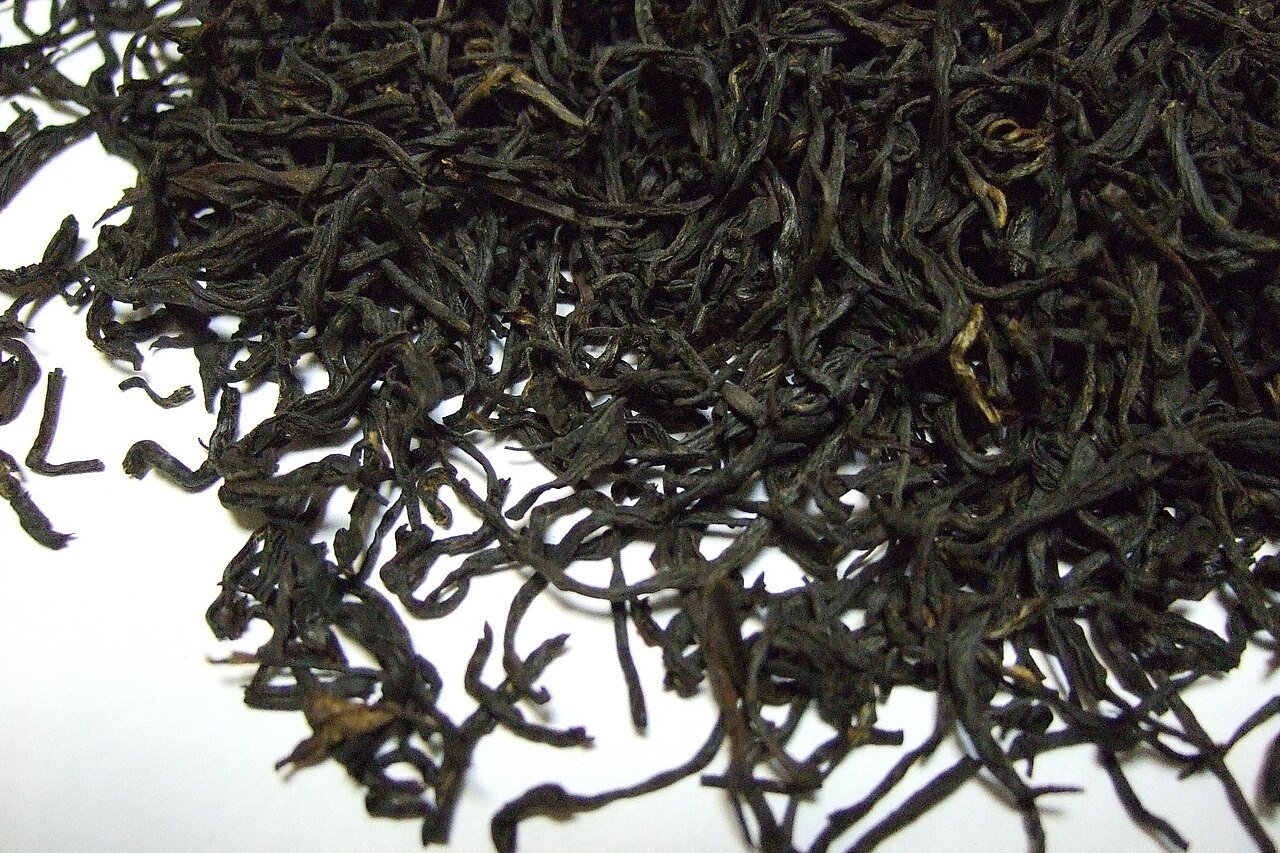
Keemun is the older English spelling for Qimen, the Anhui county strongly associated with this tea. The style is often described as aromatic and relatively smooth, with individual lots varying in body and finish. It is a useful first comparison when you want a black tea that rewards attention to fragrance. A named origin should invite a look at the actual producer description, not stand in for tasting.
Whole leaf and broken leaf can brew at different speeds. If your Keemun looks fine and fragmented, begin tasting earlier than you would with long intact strands. If the packet mentions a particular cultivar or harvest, keep that detail with your notes so you can compare another batch later. A grade word on its own cannot guarantee the cup you will prefer.
Compare Yunnan and Fujian examples
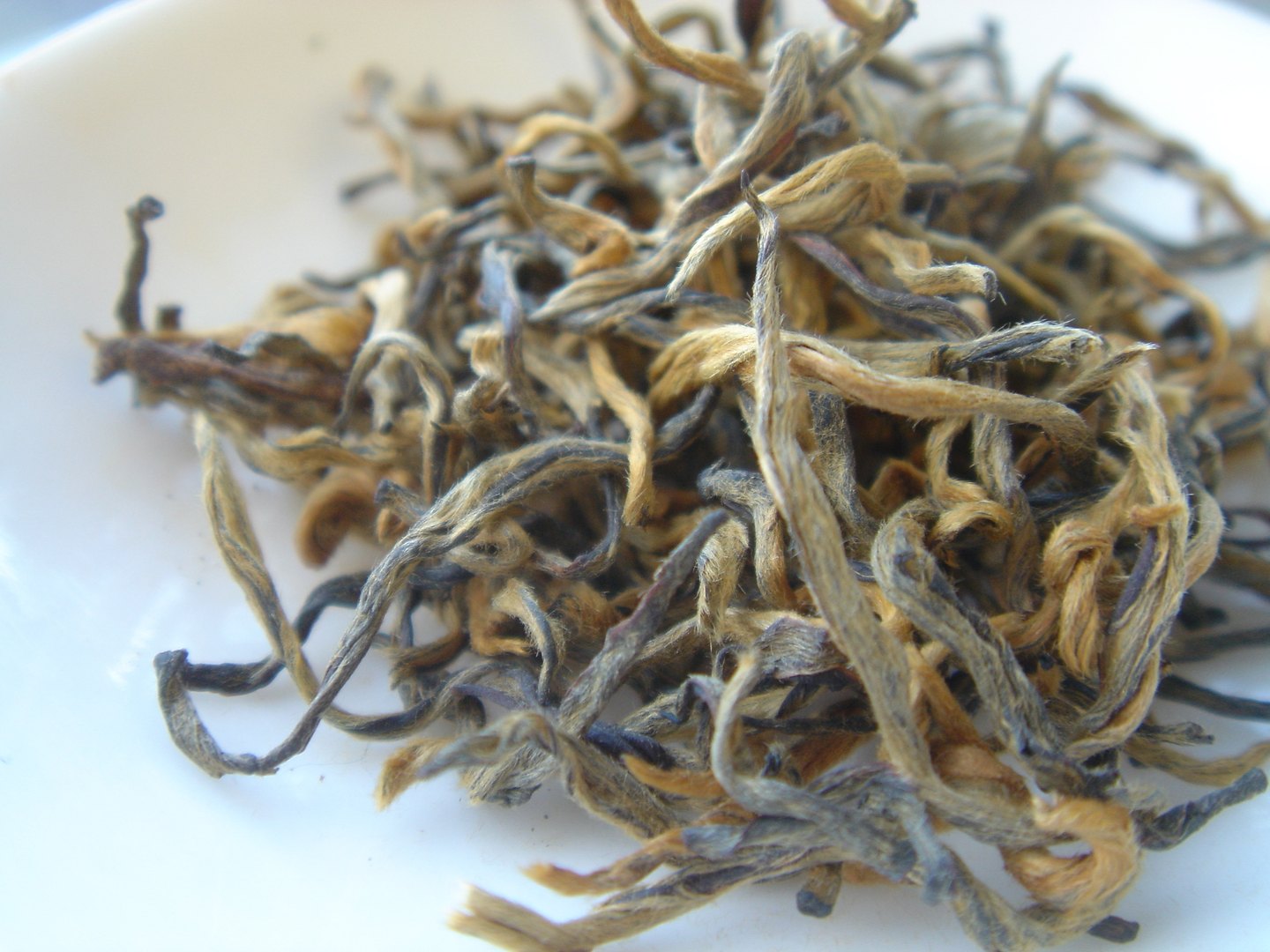
Dian Hong names Yunnan black tea. Producer accounts often describe its larger-leaf material and golden tips, and many examples offer a rounder, fuller impression than a light Keemun. This is a tendency, not a required flavor profile. The amount of bud, leaf size, and maker's technique change the brew. Compare two small packets if you want to learn what Yunnan adds to the category.
Lapsang Souchong belongs to a Fujian black-tea tradition and is also labeled Zhengshan Xiaozhong in Chinese. Some examples are smoked with pine, while others are unsmoked; the name alone is not a promise of smoke. Ask the seller which finish is used. A smoky tea may be an enjoyable choice, but it is a different comparison from judging the inherent oxidation character of an unsmoked black tea.
Jin Jun Mei is another Fujian black-tea name associated with the Tongmu area and bud-focused picking. Specialist makers describe withering, rolling, oxidation and drying of single buds. The name has spread beyond the original area, so ask where a particular packet was made rather than treating gold-colored tips or the printed name as proof of origin. An example described by Seven Cups is dried without pine smoke; check the finish of the product you actually buy.
| Style | Area associated with the style | Leaf or finish clue |
|---|---|---|
| Keemun (Qimen) | Qimen, Anhui | Whole or broken leaf; check the cut for brewing time |
| Dian Hong | Yunnan | Larger-leaf styles; some lots show golden buds or tips |
| Lapsang Souchong (Zhengshan Xiaozhong) | Fujian, especially Wuyi/Tongmu traditions | Smoked and unsmoked versions exist; ask which finish |
| Jin Jun Mei | Tongmu origin tradition, Fujian | Bud-focused black tea; the name is also used more widely |
Descriptions identify styles, not a guarantee of origin, taste or authenticity for an unlabeled lot.
Read a packet for the details that matter
Look for an identifiable tea name, region, leaf form, and a clear note about any smoke or added scent. Find the producer's brewing guidance, especially when the leaf is small or the packet is a blend. If you want to taste black tea itself, begin with an unscented example. If you want a deep smoky cup, choose a clearly identified smoked Lapsang instead of assuming all Fujian black tea has that character.
Choose a modest quantity at first. An expensive designation or a high ratio of visible golden tips may be interesting but cannot settle whether the finished tea tastes balanced to you. Try the tea plain before additions so you can understand its aroma and finish; after that, use it however you enjoy it. A good everyday choice is one you can brew consistently.
Make an ordinary mug
Place about 3 g of loose leaf in a removable infuser and add 200 ml of safe, pleasant water around 90–95°C. Taste at two minutes, then extend in short steps if the cup is thin. Remove the infuser when the flavor is where you want it. Producer advice has priority where the tea's leaf form suggests a different method; TeaVivre's black-tea guide itself allows a broad range of mug infusion times.
If you brew a second cup from the same leaves, taste it rather than assuming the first time should be copied. More time may be needed, but a small broken-leaf tea may give less on the next round than a whole-leaf tea. A scale helps because twisted Yunnan leaves and fine broken Keemun do not fill a spoon in comparable ways.
Steer strength without making it harsh
A dry, astringent first cup may need less contact time, particularly with small leaf pieces. If it remains rough, try slightly cooler water on the next attempt while holding the dose steady. A weak cup may need more leaf or a longer infusion. Change one variable per cup, then note which version you liked. The same tea can be lively in a small mug and flat in a very large one.
A smoky finish is not a brewing defect if the tea was deliberately smoked. An unpleasant foreign or musty odor is different: check the leaves and their storage rather than trying to cover the smell. The point of adjusting is to make the intended character clear, not to force every Chinese black tea into the same strength.
Keep black tea clean and ready to brew
Store everyday black tea in a dry, opaque, well-closed packet or food-safe tin, away from sunlight, stove heat, and spices. Open it only when measuring, then close it promptly. If a smoked tea shares a cupboard with delicate leaves, keep both sealed so their aromas do not mingle. Retain the original label or write down the tea and opening date.
Black tea may be more forgiving than fresh green tea, but it can still lose aroma or absorb moisture. A fixed expiration promise is less useful than checking the packet and tasting the brew. Discard leaves that are visibly moldy or smell distinctly musty. Keep them away from damp rooms and do not assume an older tea has gained value simply because it has been stored.
Sources and further reading
- TeaVivre, Chinese black tea processing and grading
- TeaVivre, Chinese black tea regions and styles
- TeaVivre, black tea brewing guide
- TeaVivre, Lapsang Souchong processing
- TeaVivre, smoked and unsmoked Lapsang Souchong
- TeaVivre, Jin Jun Mei origin and bud processing
- Seven Cups, Tongmu Jin Jun Mei maker and unsmoked finish
- Seven Cups, unsmoked Zhengshan Xiaozhong product description

