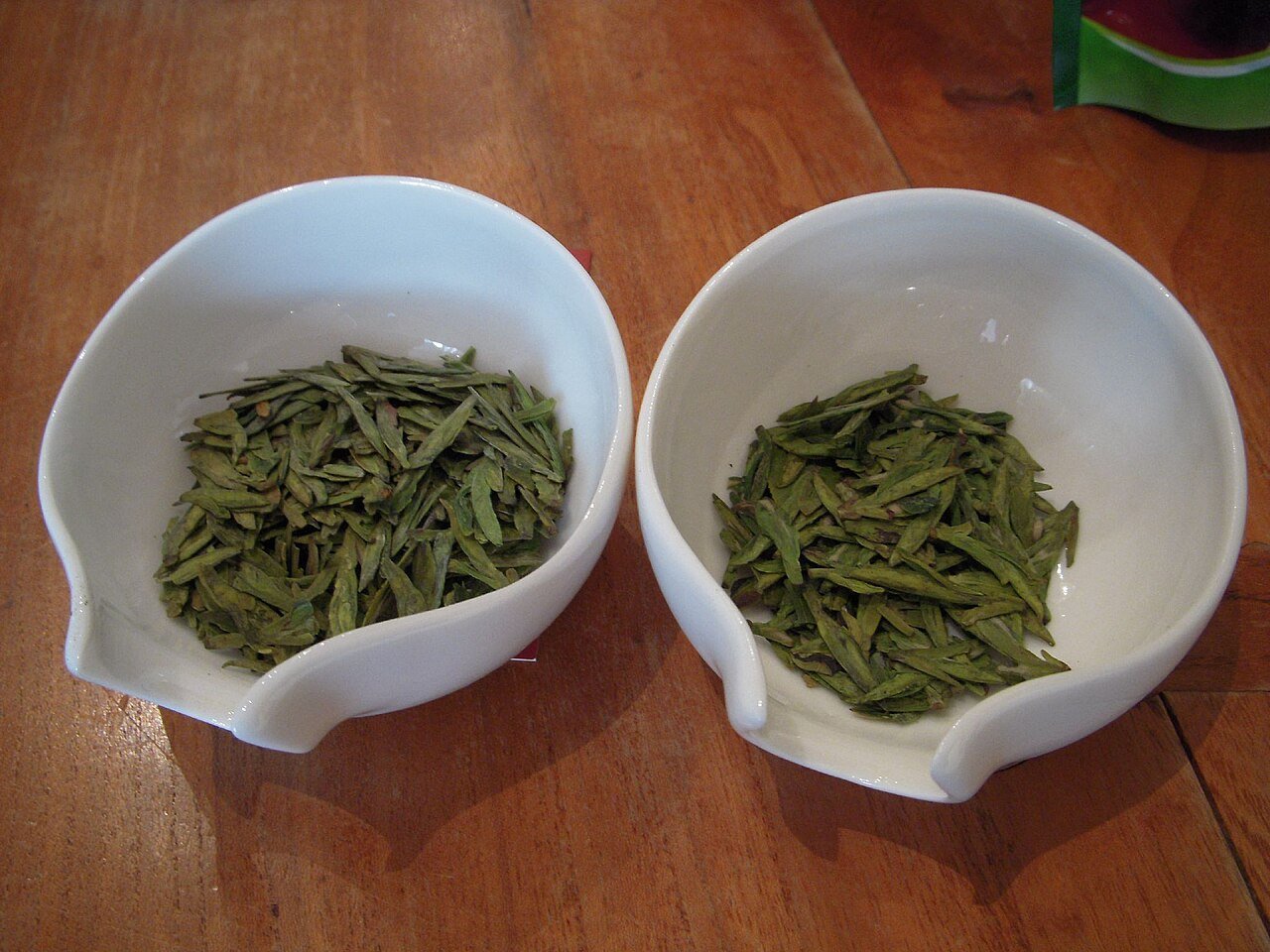
First mug: weigh 3 g of flat leaf for 200 ml of water around 80–85°C; taste after one minute and lift the infuser when balanced.
Recognize the tea without treating shape as a certificate
Longjing is a green tea: heat is applied early enough in making to limit the fresh leaf's enzymatic browning. The finished leaves are characteristically flattened during pan work. Longjing, Long Jing and Dragon Well are different ways an English-language label may identify the style. A packet may also give Chinese characters, a harvest season or a more precise place. Read all of those details together rather than letting a familiar name carry the whole claim.
The flat form is genuinely useful when learning the style. It can explain why a spoonful of Longjing weighs differently from a spoonful of curled green tea, and why it is pleasant to watch the leaves open in a glass. It cannot authenticate a West Lake origin. Lighting, cultivar and processing can also change the shade and size of the dry leaf. A photograph can help you recognize what is offered, but provenance needs records from the seller or producer.
Separate West Lake from the wider Longjing area
Zhejiang is the province to locate first. Chinese forestry material describes West Lake, Qiantang and Yuezhou as Longjing-producing areas across designated parts of Hangzhou, Shaoxing, Jinhua and Taizhou. West Lake, or Xihu, identifies a narrower origin than the word Longjing alone. The West Lake Longjing name has a defined local production area and a specific label system. A seller's generic reference to Hangzhou or a picture of the lake does not establish that a particular lot qualifies for that narrower designation.
When origin matters to you, ask for the exact growing area and the evidence attached to the lot. A useful listing may identify producer, picking place, tea variety, harvest and processing details. For a West Lake claim, ask how its specialized label or traceability information can be checked. Treat missing details as unknown, not as a verdict that the tea is poor. A clearly described Zhejiang Longjing outside West Lake may still be a worthwhile tea; the question is whether the label describes it accurately.
Read Ming Qian and Yu Qian as harvest timing
Ming Qian means picked before Qingming, the solar term that falls in early April. Yu Qian means picked before Guyu, the later solar term in April; on a spring-tea label it commonly points to the period after Qingming and before Guyu. These words can help you place a harvest in the season. They do not identify a particular garden, certify West Lake origin or award a guaranteed tasting grade. Ask for a harvest year as well as the seasonal phrase.
Early spring leaf may be small and tender, but judging a tea requires more than its calendar position. Weather shifts the picking window, and careful pan work and storage matter after harvest. If two packets are both called Ming Qian, they can still differ in variety, maker, picking standard and handling. Compare the information that is actually supplied, then compare the cups. A named season is most useful as one field in a traceable description, not a substitute for trying the leaf.
Understand what the pan work changes
Freshly picked leaf goes through heat fixing, shaping and drying, with the maker controlling the sequence and finish. In Longjing, contact with a hot pan helps both limit oxidation and produce the distinctive pressed shape. Hand and machine methods exist, so a label that only says pan-fired does not tell you every production detail. The process also explains why green tea need not brew a vivid green liquor: a clear yellow-green or pale gold cup can be entirely normal.
Descriptions such as chestnut, sweet or vegetal can give you something to look for in a particular cup. They are possibilities, not compulsory notes for every Longjing. A toasted impression can come from finishing, but the strength of that impression varies. If a packet gives a variety or cultivar, record it as a useful comparison field rather than assuming its name predicts flavor. The practical question is how this batch behaves with your water and a measured dose.
Make a first mug you can repeat
Use a roomy removable infuser or a small pot so the leaves can open and you can stop extraction. As a cautious trial, weigh 3 g into 200 ml of pleasant drinking water around 80–85°C. Taste after about one minute, then continue in short intervals until the cup has enough body for you. Lift the infuser or pour the whole pot into a cup. Follow the packet's directions first if they are specific to the lot; the trial numbers are a starting point, not a rule for all Longjing.
A teaspoon is a poor dosing tool for flat leaves. If the cup is thin, give it a little more time before changing the amount of leaf. If it becomes sharp or coarse, shorten the next infusion; try slightly cooler water on a later attempt if needed. Change one factor at a time and write down what you did. A second pour may be enjoyable, but taste it rather than assuming a fixed number of infusions.
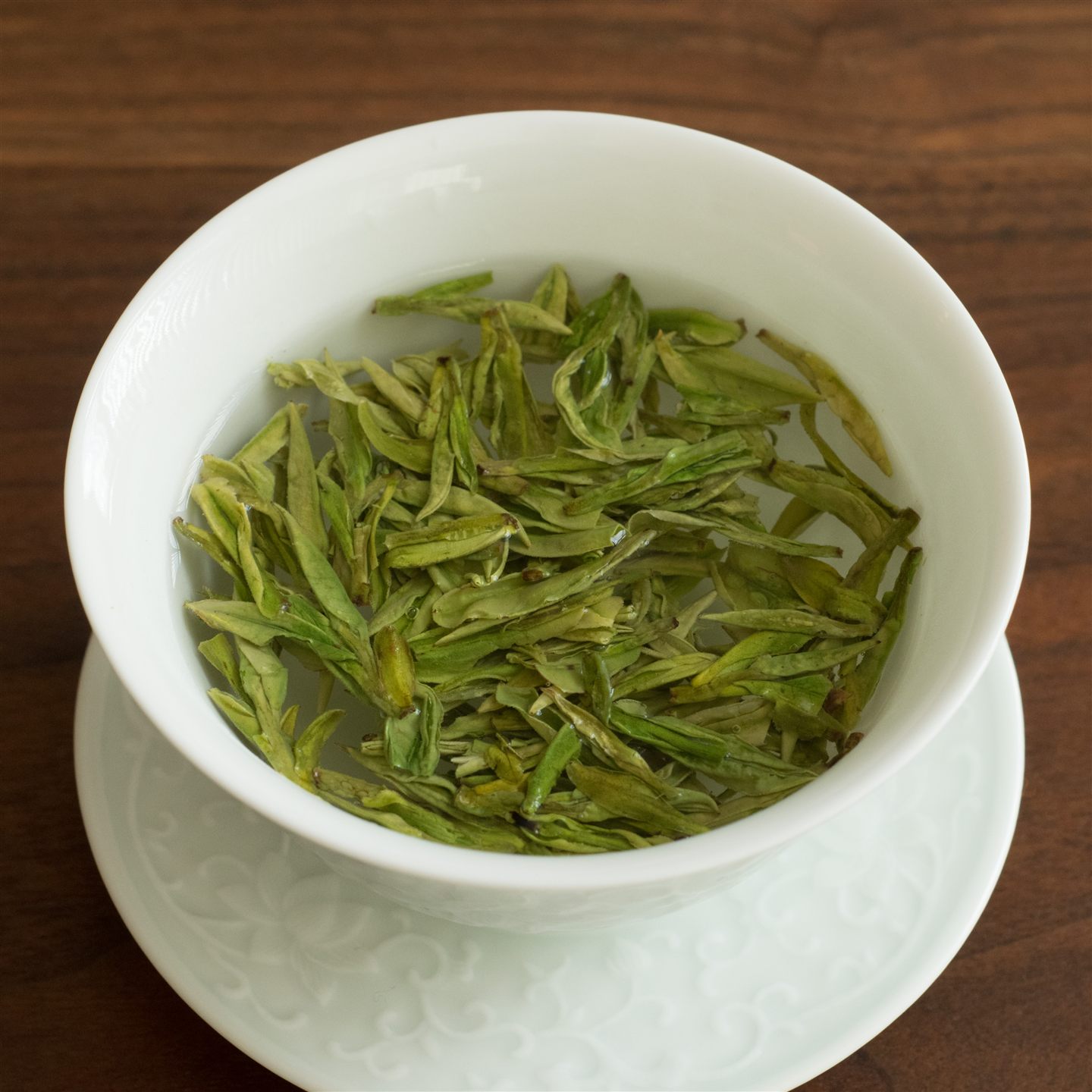
Use a small vessel for a closer comparison
If you have a gaiwan or small teapot, a trial of about 3 g in 100 ml around 80–85°C gives a gentler starting ratio than many concentrated methods. Pour a short first infusion, taste it, and alter the next pour by seconds. Use a vessel that lets the broad leaves move freely and decant each pour completely. These numbers are an experiment for comparison, not a special test of authenticity or a promise of particular flavors.
Try the same leaf in a mug another day. Keep the water source and dose written down so the vessel is the main change. The small vessel lets you notice how aroma and texture move across short pours; the mug tells you how the tea works as an everyday drink. Neither method proves an origin claim. The point is to discover whether the cup suits you before buying more of the same described lot.
Choose a sample and preserve its freshness
For a useful comparison, choose two small packets with their places and harvest years clearly stated. One might be a documented West Lake lot and the other a different, clearly named Zhejiang Longjing. Brew equal weights with the same water, following each producer's advice where it differs. Record aroma of the dry leaf, aroma after wetting, first sip and finish. Let the actual cup decide which one you would want again, rather than an origin name alone.
Keep the working packet well closed, dry, cool, dark and away from cooking or perfume odors. A small amount is easier to finish while its aroma remains lively than a large opened reserve. If you refrigerate a thoroughly sealed reserve, let the unopened packet reach room temperature before opening so moisture does not condense on cold leaves. Keep the identifying label with it. That way, if you enjoy a cup, you know which harvest and origin description to seek again.

