First mug: try 3 g in 200 ml of water around 80–85°C, taste early, and remove the leaves when the cup is balanced.
Start with the spiral and the green-tea method
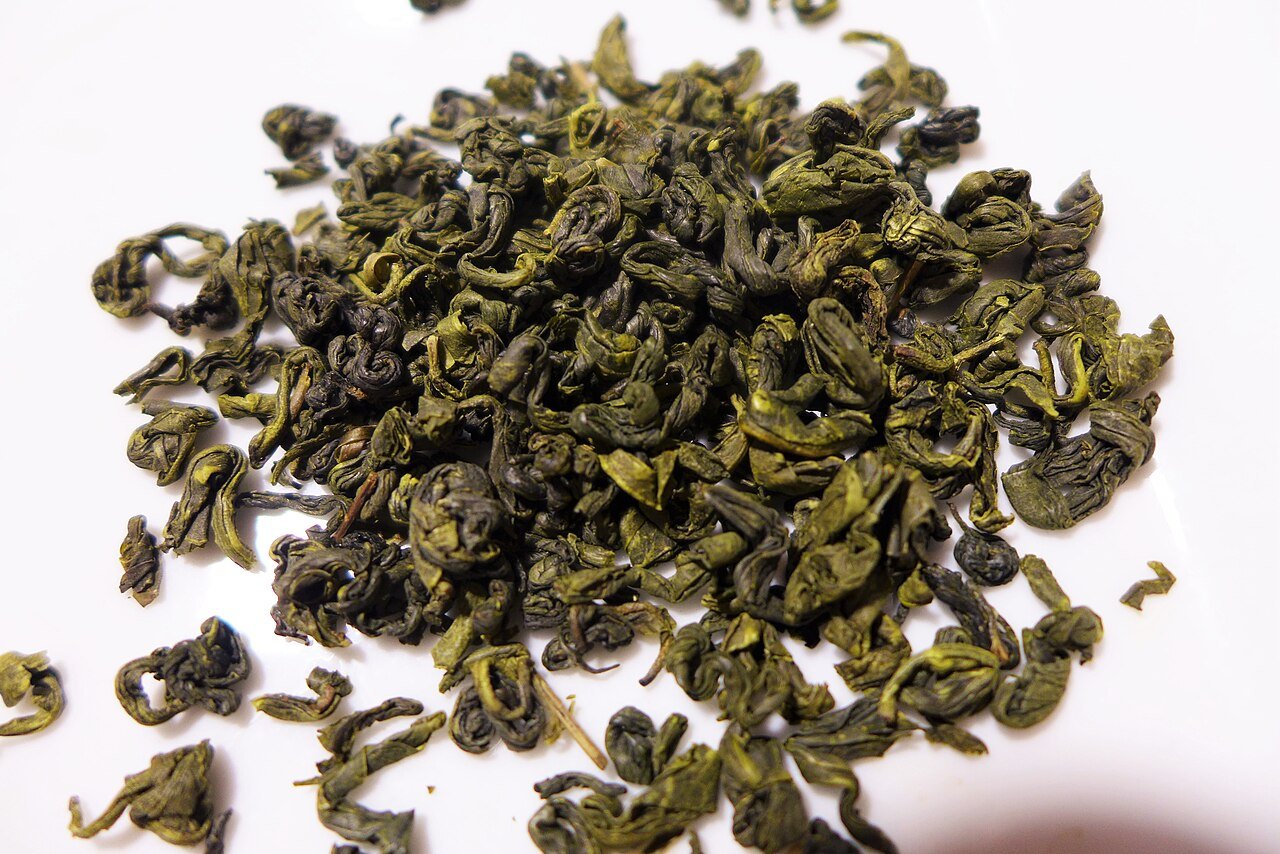
The name points to a curled spring leaf. A finished Bi Luo Chun may show tight little spirals, fine pale hairs on young material, and a mixture of bud and small leaf. Heat fixing limits oxidation, while shaping and drying give the leaf its final form. One producer's page shows rolling the warm leaves between the hands after pan work; other makers may use different handling. The appearance is an invitation to inspect the tea, not a quality score by itself.
Fine hairs can be normal on young tea leaves and may be visible in the cup. Their presence is not a reliable home test of growing area. Very similar curls can be made from different plant material and in different regions. Notice size and shape because they help you choose an infuser and measure a dose, then turn to origin and maker information for the claims a photograph cannot answer. Bi Luo Chun is still a green tea even if one cup tastes more floral than another.
Locate Dongting beside Taihu, not on the other Dongting Lake
The traditional Dongting Bi Luo Chun area is around Taihu, or Tai Lake, near Suzhou in Jiangsu province. Dongshan and Xishan are the east and west hills associated with it. This Dongting name should not be confused with Dongting Lake in Hunan, a different place. A specialist producer describes a Suzhou lot by its hill, maker, tea bush and picking standard. Those details make the claimed place more meaningful than the word Dongting standing alone.
Bi Luo Chun appears on packets from beyond that traditional area. Eco-Cha, for example, describes a green tea made in Sanxia district of New Taipei City, Taiwan, under the same name. That is a distinct and openly labelled origin, not a claim that the leaf came from Jiangsu. The two teas may differ in cultivar, growing conditions and processing. Read the complete name and place: Dongting Bi Luo Chun, a Jiangsu Bi Luo Chun, and a Taiwan Bi Luo Chun are not interchangeable descriptions.
Ask a label to identify the actual lot
A useful packet says more than spring green spiral. Look for country, region and a smaller growing area if the seller knows it. A producer or maker, tea-bush variety, harvest year and packing date give you better questions for a second purchase. Not every small producer publishes every field, so unknown information is simply unknown. If a seller invokes Dongting, ask specifically which Jiangsu area the fresh leaves came from and what traceability is available.
Avoid using a pale downy surface or tightly curled shape as an authenticity verdict. Those cues can describe the leaf in your hand; they cannot locate its garden. A price or a poetic origin story also cannot do that work. Compare two transparently labelled samples and keep their packets while tasting. If you find one enjoyable, the precise name and year make it easier to buy a comparable tea next time.
Notice how different makers handle the leaf
Green processing is the family connection, but its steps are not identical across all Bi Luo Chun labels. A Jiangsu producer describes hand frying and kneading to create a twisted shape. The Taiwan producer describes spreading young leaves before applying heat to preserve a fresh green character. A production note can therefore explain a difference that origin alone does not. Read a maker's method when it is supplied, especially before assuming two cups ought to match.
Tasting descriptions are equally batch specific. One seller may emphasize floral or fruit-like aroma; another may describe a fresh vegetable impression. You can use those words as prompts, then name what your own cup actually gives. A tea that seems quieter than its packet's description may need a different brew, or it may simply be a different harvest and leaf. Neither outcome makes one regional use of the name a universal flavor standard.
Brew a light first mug, then adjust one factor
For an easy trial, weigh 3 g into a roomy infuser with 200 ml of pleasant drinking water near 80–85°C. Start tasting after about a minute and lift the infuser when the cup has the balance you like. Use the packet's advice when it is more specific: a Taiwan producer suggests 5 g in 300 ml at 85°C for two minutes, while a Jiangsu seller gives its own ratio and time. These are directions for identified products, not one universal Bi Luo Chun recipe.
If the first cup is faint, let the next infusion run a little longer. If it is sharp, shorten contact before changing heat and dose together. Small curled leaves can pack densely in a spoon, so use grams when comparing teas. A second infusion may reveal a different impression; let it run to taste rather than counting promised rounds. Note the actual water temperature, time and leaf weight so you can recreate a cup you liked.
Try short pours if you want to observe the leaf closely
A small gaiwan is an optional experiment. Begin with about 3 g in 100 ml of water near 80–85°C and a short first pour of roughly 30 seconds. Decant completely, taste, then lengthen or shorten the next pour according to the result. This gentler trial uses less leaf than some seller methods and may suit a first look at tender leaves. The vessel should leave room for the spirals to open; a cramped filter makes the comparison harder to interpret.
To compare a Jiangsu and a Taiwan sample fairly, use the same vessel, water and leaf weight for one round of trials. Later, follow each producer's own directions to see what the maker intended. Write down aroma after wetting, body, any roughness and the finish. Do not score a packet from its photo before tasting it. The strongest comparison is between the two actual cups made under known conditions.
Keep a small sample fresh and choose a contrast
Store the tea dry, closed, dark and away from heat and strong smells. Green-tea aroma can fade after a packet is repeatedly opened, so a small sample is a sensible first choice. Keep the original label with harvest and origin details. If you plan to compare cups, make them within a similar period rather than judging one newly opened leaf against another that has sat exposed on a shelf. Freshness is part of the comparison, not a grade you can see from a picture.
For a striking shape contrast, try a clearly labelled Longjing beside the curled Bi Luo Chun. Weigh the same mass rather than matching teaspoons, and start with a modest green-tea temperature for both. A flat leaf and a spiral leaf may differ in aroma and mouthfeel, yet no shape automatically wins. Use the comparison to learn which character you want to explore further, then investigate its named origins and makers.
